
Qi Stagnation Calming Tea
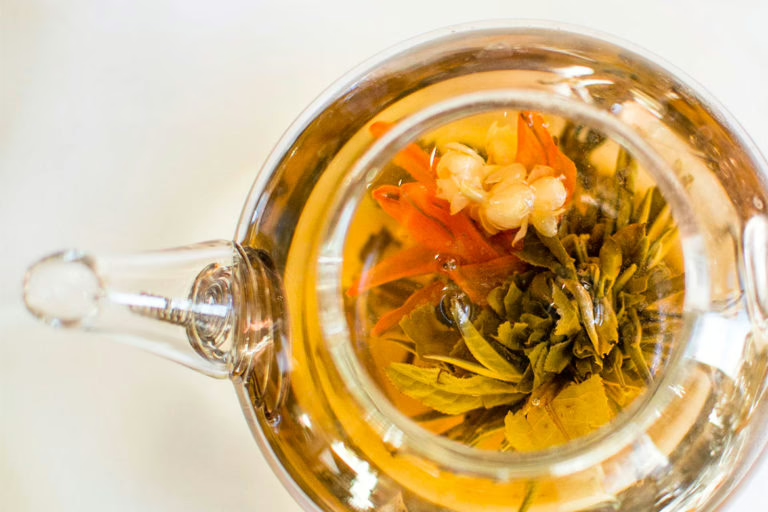
Qi Stagnation Calming Tea Link copied! Qi Stagnation. To help, we have concocted a simple Calming Tea recipe. But first, let’s look at some common indicators of Qi Stagnation: Depressed mood, nervous/anxious, timid, respond poorly in stressful situations Emotionally unstable, overtly sensitive and suspicious, anxiety disorder, stiff neck and shoulders Frequent sighing, heart palpitation, susceptible to insomnia, vivid dreams, headache, tightness in the throat Particularly in women – Premenstrual tension, breast fullness before period, endometriosis, PCOS Particularly in men – Loss of libido Qi Stagnation was a topic explored in one of our corporate talks from September 2019. To know more about our talks, kindly contact us. Recipe for Fighting Qi Stagnation Calming Tea Chrysanthemum 5 gram Dried Buddha’s hand 3 gram Wolfberries 3 gram Red Date 1 piece Put ingredients into a cup (300ml) and brew with hot water for a few minutes. Let it cool a little, before drinking. You may add rock sugar for added sweetness. A healthier alternative to consider is honey. For maximum health benefits, avoid adding sugar. Check out our nourishing meat and soup recipe here. Disclaimer: The content on this page is for information and educational purposes only. Such medical information may relate to disease, injury, drugs and other treatments, medical devices and/or health products. Medical information does not amount to advice, and if advice is needed an appropriate professional help should be sought. The disclaimer asserts that no warranties or representations are given in respect of the medical information, and that the website operator should not be held liable if a user suffers any injury or loss after relying upon the medical information. RELATED TOPICS YOU MIGHT ALSO LIKE
3 Steps to Good Quality Sleep

3 Steps to Good Quality Sleep Link copied! Originally posted on Mednefits.com written by Physician Leong Weizhen 1) Recognising what poor quality sleep is Most people see poor sleep and think “Oh, I have good quality sleep. I fall asleep so fast. I don’t need to read this” and flip the page. But do you know what really defines poor sleep? If you experience lethargy, brain fog and food comas in the day, or have vivid dreams and wake up to urinate often at night, you very likely have poor sleep. Although these traits seem normal because you have had them for so long, all of them are red flags for insufficient sleep in quality and/or quantity. According to the Division of Sleep Medicine at Harvard Medical School [1], insufficient sleep in the short term can affect emotions, learning and increase the likelihood of severe accidents and injuries. Extended periods of poor and insufficient sleep can result in a plethora of health issues including obesity, diabetes, cardiovascular diseases and shortened lifespans. 2) Leveraging TCM to identify the accurate root cause of poor quality sleep Traditional Chinese Medicine (TCM) aids sleep quality in many ways but it is important to first understand the right root cause. For example, some patients may be having poor appetite or excessive food intake which results in dreams and worries in the night. This is likely due to spleen deficiency causing sleep disturbance. Depression and anxiety also prevent one from having good quality sleep, and that could be due to Qi and blood stagnation. Working adults typically struggle to fall asleep, stay asleep or achieve deep rested sleep, driven by stress and an overactive mind. In this case, it is likely liver fire disrupting the mind. Hence, TCM physicians need to know more about patients through a detailed consultation – not just about sleeping patterns but also daily living habits. There are usually other symptoms which will point out the relevant imbalances that need to be corrected and harmonised. 3) Effective TCM solutions for great sleep and energy TCM solutions for resolving poor sleep issues are highly customised depending on the root cause identified through our diagnosis. In our herb prescriptions, we aim to balance patient’s specific body constitution and blend herbs such as FuShen 茯神, SuanZaoRen 酸枣仁, ZhenZhuMu 珍珠母 and GuiYuan 桂圆 which are specific to improve sleep quality. Acupuncture is also an effective treatment option to help improve sleep quality. According to Pacific College of Oriental Medicine [2], by targeting and rectifying the imbalance of Qi and Yin Yang in the body, acupuncture helps the body and mind regain balance and harmony. The stimulated flow and unblocking of stagnated Qi in the meridians and the body helps improve your mind and body, helping you to rest better and thus get better sleep There are typical acupoints used to improve sleep quality such as YinTang印堂, ShenMen神门, NeiGuan内关, SanYinJiao三阴交. You can try massaging these points daily, 5 mins each point, for home therapy as well. Our clinic also utilizes state-of-the-art FDA-registered medical device to improve lymphatic drainage via Electro-Lymphatic Therapy. By reducing water retention, pain and clearing lymph congestion, many patients report feeling relaxed and experience better sleep. How would you be able to tell when your sleep has improved? Good rest happens when you have a peaceful sleep, fall asleep within 20 minutes of getting in bed, stay asleep most of the time you spend in bed as well as waking up feeling refreshed and energized throughout the day. Better rest results in stronger immunity, higher productivity, more energy as well as no food comas! If you have been looking to improve your sleep quality and have tried caffeine reduction and sleeping aids with minimal results, do not despair. Make an appointment with our Singaporean bi-lingual TCM Physicians trained in China today to improve your quality of sleep and life today! Make an appointment with us at +65 8087 0486 or go to our contact page to make an appointment. Disclaimer: The content on this page is for information and educational purposes only. Such medical information may relate to disease, injury, drugs and other treatments, medical devices and/or health products. Medical information does not amount to advice, and if advice is needed an appropriate professional help should be sought. The disclaimer asserts that no warranties or representations are given in respect of the medical information, and that the website operator should not be held liable if a user suffers any injury or loss after relying upon the medical information. References: 1. http://healthysleep.med.harvard.edu/healthy/matters/consequences 2. https://www.pacificcollege.edu/news/blog/2014/10/03/acupuncture-insomnia-and-sleep-disorders RELATED TOPICS YOU MIGHT ALSO LIKE
Understanding our lymphatic system and how it works

Understanding our lymphatic system and how it works Link copied! You have heard of the body’s lymphatic system, but how well do you know of its function and the role it plays in our body’s daily function? The fact is that the lymphatic system is involved in such complex diverse (multitude) ways that it is difficult to do a simple introduction of this important system. It is therefore not surprising that most may not have a good enough understanding of our lymphatic system and how it works. The lymphatic system is an extensive drainage network comprising of lymphoid organs, lymph ducts, lymph tissues, lymph capillaries and lymphatic vessels that carry lymph and other substances throughout the body. There are hundreds of lymph nodes in the human body. They are located deep inside the body, such as around the lungs and heart, or closer to the surface, such as under the arm or groin. Functions of the lymphatic system and how it works Essentially, the lymphatic system is responsible for 3 Major functions of the body: Maintain the balance of our bodily fluid by returning fluid to the heart Help large molecules enter the blood Immune surveillance Click to enlarge Lymphatic vessels, also known as lymphatics, are responsible for maintaining the balance of the body fluids. As blood moves through the arteries and veins, 10% of the fluid filtered by the capillaries, along with vital proteins and antigens, leaks out into the interstitial space and becomes trapped in the tissues of the body. The lymphatic system collects this fluid through lymphatic vessels, also known as lymphatics, and returns it to the circulatory system. The lymph is released back into the circulatory system through two major ducts at the neck area: right lymphatic duct and thoracic duct (also known as left lymphatic duct). This removal of excess fluids from body tissues is crucial because water, proteins, and other substances are continuously leaking out of tiny blood capillaries into the surrounding body tissues. If the lymphatic system didn’t drain the excess fluid from the tissues, the lymph fluid would build up in the body’s tissues, and they would swell. The lymphatic system plays an integral role in the immune functions of the body. It is the first line of defence against disease. Lymphoid organs remove foreign material in lymph from entering the bloodstream and act as lookouts in the immune system. When lymph drains to a nearby lymph node, pathogens are detected and allows the system to elicit an immune response and prevent the onset of illness and diseases from invading microorganisms. The spleen also helps the body fight infection. The spleen contains lymphocytes and another kind of white blood cell called macrophages, which engulf and destroy bacteria, dead tissue, and foreign matter and remove them from the blood passing through the spleen. The lymphatic system helps deliver nutrients to our tissues and removes wastes from them. For instance, Fatty acids get packaged into chylomicrons at the small intestines and since they are too big to move to enter the bloodstream through the capillaries, they are instead dumped back into the blood at the thoracic duct via our body’s lymphatic vessels. Source: dynamicscience.com.au Unlike our circulatory system where the heart pumps blood around the body, our lymphatic system does not have a pump. Instead, the unidirectional flow of lymph is maintained by intraluminal valves and smooth muscles in lymph vessels that react to arterial pulse and skeletal muscle. Since the lymph system must be pumped by the movement of our muscles, the less we move, the more stagnant our lymph system becomes. With today’s sedentary lifestyle, pollution, diets low in nutrients and high in fats, sugars, additives, preservatives and, because most of us fail to drink enough pure water to assist our body to eliminate toxins, our lymphatic system becomes overloaded, congested and clogged. Fatigue, stress, infection, emotional shock, lack of physical activity or dehydration may also stagnate the flow of lymph. Consequently, as toxins accumulate, cells are unable to function properly resulting in various metabolic and infectious problems. Effects of a malfunctioning lymphatic system Although further studies still have to be made, many existing studies have observed a correlation between lymphatic vascular defects and obesity, hypertension as well as other metabolic disorders. This is because the immune response and metabolic regulation are highly integrated and the proper function of each is dependent on the other. In addition, research on mouse models has shown that the magnitude of obesity was correlated to the extent of disorganization and leakage of the lymphatic vessels, with the oldest and most obese mice having the most severely disrupted lymphatics. On the other hand, the inability by lymphatics in our small intestines to pick up lipids will result in malabsorption. Aside from impacting our metabolic system, when the nodes, ducts, vessels or lymph tissues become blocked, infected, inflamed or cancerous, the lymphatic system can become dysfunctional and result in various lymphatic conditions. Common lymphatic conditions A common disorder of the lymphatic system is lymphoedema, a condition caused by a built up of fluid in tissues that result in swelling. It generally occurs in arms or legs and is usually caused by removal or damage to lymph nodes. This failure to drain fluid properly causes accumulation of protein-rich fluid combined with inflammation, adipose tissue hypertrophy, and progressive fibrosis, ultimately leading to reduced quality of life, functional impairment, and physical deformity. Infection can lead to enlargement of the lymph nodes due to an increased immune response in the area in order to fight off foreign pathogens. This is known as lymphadenopathy. The least common but most serious lymphatic disease is lymphoma, which is the formation of cancer cells in lymph nodes. Lymphoma is usually secondary and arises when cancer spreads from a primary tumour (such as in the breast) to nearby or regional lymph nodes. It is rare for a cancer to start in the lymphatic system itself (a primary cancer). Other than the aforementioned, there are many other
Nourishing Recipes – Soup & Veggies
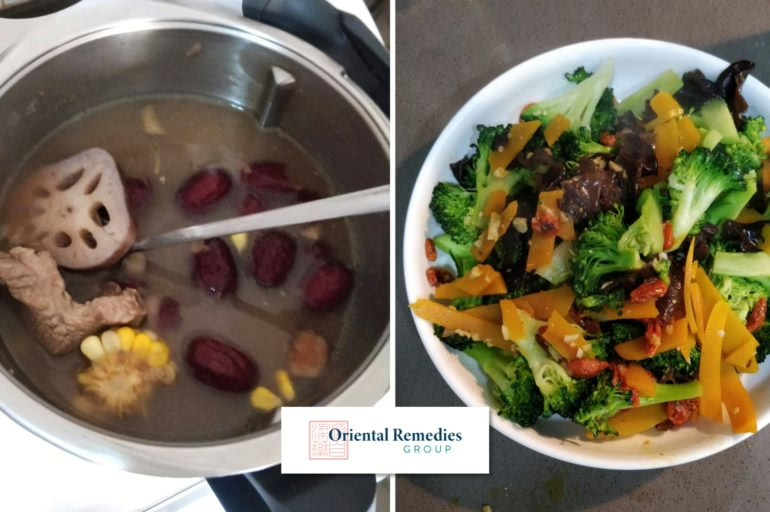
Nourishing Recipes – Soup & Veggies Link copied! Qi & Blood Boosting Pork Rib Soup & 5 Colour Broccoli & Pumpkin Stir Fry Click to enlarge Click to enlarge Steps Place pork ribs in 700g water in a mixing bowl to blanch. Do 8 mins of reverse slow stir. (for Thermomix) Discard water and rinse the meat. Wash Chinese yam and peel the skin, making sure to wear gloves to prevent itching. Cut to size. Wash the other ingredients and cut to size. Add all the ingredients into 1000g of water to cook.Do 60 mins at 100 degrees reverse, slow stirring. Add salt to taste. Click to enlarge Click to enlarge Click to enlarge Click to enlarge Steps for 5 Colour Broccoli & Pumpkin Stir Fry Wash and prepare all the ingredients Remove pumpkin skin and cut into thin slices Put garlic into the bowl to chop 5-sec sp5 Use a spatula to scrape down the garlic Add oil to saute 3 mins 120 deg sp 1 Add all the ingredients n salt to fry 4 mins v reverse spoon Serve hot Click to enlarge Click to enlarge Click to enlarge Click to enlarge Click to enlarge Click to enlarge Article by Physician Leong Weizhen (Founder of Oriental Remedies Group, Singapore), a registered Tradition Chinese Medicine Physician Disclaimer: The content on this page is for information and educational purposes only. Such medical information may relate to disease, injury, drugs and other treatments, medical devices and/or health products. Medical information does not amount to advice, and if advice is needed an appropriate professional help should be sought. The disclaimer asserts that no warranties or representations are given in respect of the medical information, and that the website operator should not be held liable if a user suffers any injury or loss after relying upon the medical information. RELATED TOPICS YOU MIGHT ALSO LIKE
TCM Tea – For Digital Fatigue
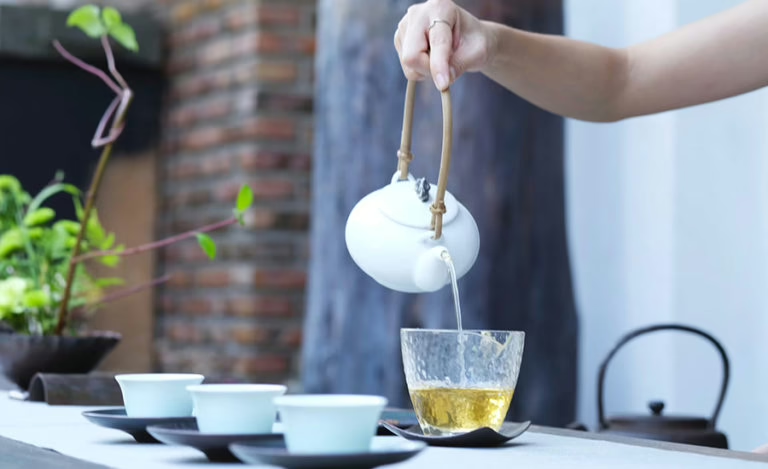
TCM Tea – For Digital Fatigue Link copied! Click to enlarge Are you glued to your computers, laptops, handphones, television all day long? You might be impacted by digital fatigue. This type of visual fatigue can set in as quickly as 2 hours. It results in physical discomfort of the eye after prolonged exposure to a digital screen. What are some of the signs of Digital Fatigue? Sore, tired, irritated eyes Difficulty focusing Dry or watery eyes Blurred vision Sensitivity to light How is Digital Fatigue diagnosed in Traditional Chinese Medicine? 1. Liver, Heart Fire Excess (More common among working adults, teenagers, students) : Redness in the eyes Tired or painful eyes Bitterness in the mouth Tension headaches Insomnia Vivid dreams Raised blood pressure Constipation Palpitations Overworked Stress Easily agitated Extreme thirst 2. Liver, Heart Fire Excess (More common among elderly) : Blurred vision Sore and tired eyes Difficulty focusing Watery Eyes Sensitive to light Dizziness Thirst Ringing in the ears Chronic lower back weakness Balding Night sweats Weak knees Are your conditions serious? Come on down for a consultation. Click here to contact us! Article by Physician Leong Weizhen (Founder of Oriental Remedies Group, Singapore), a registered Tradition Chinese Medicine Physician. Disclaimer: The content on this page is for information and educational purposes only. Such medical information may relate to disease, injury, drugs and other treatments, medical devices and/or health products. Medical information does not amount to advice, and if advice is needed an appropriate professional help should be sought. The disclaimer asserts that no warranties or representations are given in respect of the medical information, and that the website operator should not be held liable if a user suffers any injury or loss after relying upon the medical information. RELATED TOPICS YOU MIGHT ALSO LIKE
3 mistakes you are committing that prevent you from having a good night’s sleep

3 Mistakes You Are Committing That Prevent You From Having A Good Night’s Sleep Physician Derrick Soh Wished you could sleep like that? In a recent report done by a market research firm, Singapore is the 2nd country with the most sleep-deprived people, where around 62% of the population is estimated not to get enough sleep. (First on the list is Britain.) Also, in the same report, more than 8 in 10 Singaporeans spend their weekends sleeping in to repay the sleep debt they accumulate over the weekdays. Prolonged sleep deprivation can lead to depression, anxiety and a poorer immunity system. In other words, both your mental and physical wellbeing are taking blows from a lack of sleep. Understanding Insomnia with Traditional Chinese medicine (TCM) Traditional Chinese Medicine theory associates insomnia with the ‘heart spirit’ (a direct translation of 心神 xin shen). The phrase ‘heart spirit’ probably sounds weird to you, but what it actually means in TCM theory, is that the heart houses an energy and force that controls your mental and physical body, guides your consciousness and wields your sense of awareness. When there is a disruption in the heart spirit, causing a deficiency in this heart spirit or imbalance in the heart-consciousness system, this will result in symptoms like heart palpitation, headache, fatigue and insomnia. Such disruptions can be caused by a number of unhealthy habits, such as stress, prolonged frustration in your life, binge-eating, and an irregular daily routine. So, what are the 3 mistakes? 1. Surfing your phone or laptop on bed excessively before you sleep Do you always surf social media for the latest posts right before its lights out? This is one of the commonly-reported behaviour of people who have insomnia. Why does this behaviour disrupt your sleep? First of all, holding your phone close to your face in the dark exposes you directly to bright, blue-wavelength light, which is especially disruptive to your sleep rhythm. Second, reading Facebook posts and Instagram stories will over-stimulate your mind and keep the heart spirit too active when it’s time for bed, making you alert and nowhere near a state of sleepiness. Did you know: Besides its adverse effect on sleep, there are reports that show that prolonged usage of phones in the dark can lead to temporary blindness. This phenomenon is called “smartphone blindness”. What should you do? Do not surf your laptop or phone at least 30 – 60 minutes before bed. If you must, then at least do not surf it on the bed lying down. Before you sleep, settle into an activity that is relaxing, like reading a book, planning for the next day etc. Dim your home lights to ease into a comfortable environment that induces sleep. 2. Eating too much just before you sleep Supper, Singaporeans’ favourite pastime, can actually keep you awake at night. Whether it’s dim sum in Jalan Besar, frog porridge in Geylang, or durians in Balestier, most of the supper food in Singapore is rather oily, sweet and heaty. This will cause excess heat and phlegm in the body which in turn, can disrupt the heart spirit and cause insomnia. In addition, eating supper or binge-eating can also lead to weight gain and increase the risk of diabetes and high cholesterol levels. What should you do? Limit the number of supper nights to preferably 1 – 2 times each month. If you have to go for supper, eat food that is less oily and sweet, and eat just a small portion. Have your last full meal two to three hours before bedtime, if possible. 3. Sleeping in during the weekends (Yes, this is a mistake!) Bad news for everyone who sleeps in during the weekends to repay their sleep debt. Doing so is actually harmful for you. Ever experience sleeping in on a Sunday till 11am and not being able to sleep at your usual time at 11pm? And then not being able to wake up the next day for work on time? This is called “social jet lag”. Social jet lag is when there is a change in sleep schedule that many people undergo on their days off work, as compared to work days. Many people sleep much more on their off days, disrupting your body’s sleep clock. Like the above mistake, prolonged social jet lag can cause insomnia, and unfortunately, weight gain too as well. (Source from WebMD) What should you do? Limit your sleep-in time during weekends, if you aren’t able to stick to the same schedule as the weekdays. For example, during the working days, you sleep at 11pm and wake up at 6am (7 hours of sleep). During the weekends, you should go to sleep at the same time (11pm) and can wake up at 7 – 8am (1 to 2 hours more than during your weekdays). Best time to sleep? 11pm. According to TCM body clock theory, 11pm -1am (timing of the gall bladder meridian) is when yin energy fades and yang energy begins to grow. Yang energy helps you to keep active during the day and is stored when you are asleep. At 1 – 3am (timing of the liver meridian), you must be in deep sleep as during this time, the liver gets to work, toxins are removed from the body, and fresh blood is produced. Other tips to have a good night’s sleep 1. Soak your feet in warm water Soaking your feet in warm water for around 15 minutes before you sleep can help to improve circulation in your lower limbs, relieving stress and tension, thus improving your sleep. Remember to dry your feet after you have removed them from the water. In addition, you can wear socks at night for better blood circulation in your lower limbs. 2. Chinese Herbs Traditional Chinese Medicine herbs such as rose (玫瑰花), lily bud (百合), Zizyphus seed (酸枣仁) can help to improve sleep. Ask a licensed TCM physician to help you diagnose your insomnia condition and they will
