
Can TCM help with irregular menstruation?
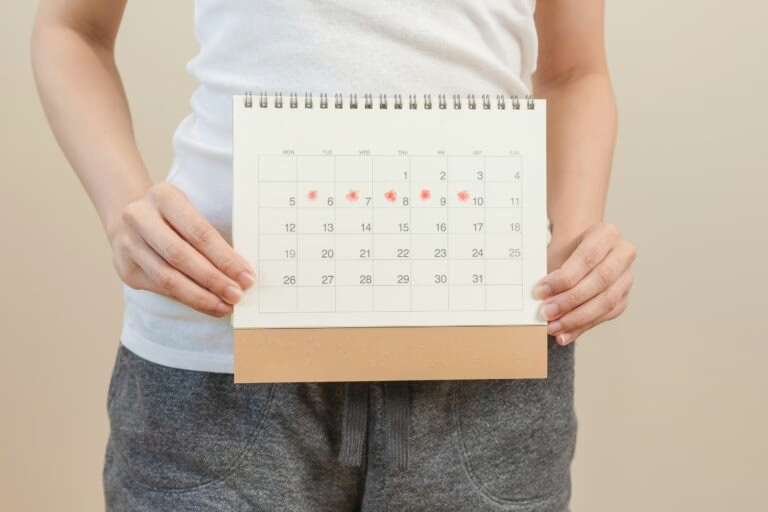
Link copied! Menstruation refers to the shedding of the lining of the uterus (endometrium) accompanied by bleeding. This usually occurs monthly throughout a woman’s reproductive life, except during pregnancy. Menstruation starts when a woman experiences puberty and stops permanently after menopause. The menstrual cycle is defined as the first day of bleeding of one cycle to the first day of menstrual bleeding of the next cycle, and the length of the menstrual cycle varies among different women. Normally, regular menstrual cycles range from about 21-35 days and the average is 28 days. [1][2] The menstrual period usually lasts around 2-7 days and on average women will lose about 20-90 ml of blood in a period. [3] The menstrual cycle is regulated by hormones such as Follicle-stimulating hormones (FSH), Luteinizing hormone (LH), estrogen and progesterone. When females reach puberty, the hypothalamus will send signals to pituitary glands to release FSH and LH. These will trigger the secretion of estrogen and progesterone that are required for ovulation and the formation of endometrium lining for fertilization. When there is no fertilization, estrogen and progesterone levels decrease and the endometrium lining starts shedding, resulting in the start of the next menstrual cycle. What is the TCM’s perspective on menstrual periods? 女子二七而天癸至, 任脉通,太冲脉盛, 月事以事下 According to the Inner Canon of the Yellow Emperor (黄帝内经) ,menstrual cycles usually occurs at the age of 14 in which the congenital Kidney essence (天癸) arrives, the flow in Ren meridian (任脉) opens up and the energy in Chong meridian is sufficient. The congenital Kidney essence (天癸) is given from our parents upon conception which is further nourished by the Kidney essence (肾精) and the essence from food transformation by the Spleen (脾) as we age (先天天癸始父母,后天精血水榖生). Besides being in the food transformation, the Spleen also plays an important role in blood production. The Liver (肝) harmonizes the blood and Qi in the body meridians and connects them to Chong (冲脉) and Ren (任脉)meridians at the lower abdomen. The Chong meridian acts as a blood reservoir for the uterus while Ren meridian regulates the uterus. A menstrual cycle occurs when there is an abundance of congenital Kidney essence and a balance of Kidney, Spleen and Liver functions to ensure a surplus of blood and Qi flowing to the uterus. In TCM perspective, a menstrual cycle can be viewed in four phases: Menstrual flow: the descending flow of energy and blood to expel old blood for the regeneration of new blood. Post-period: new blood and essence is needed to renourish the body and this can be achieved by strengthening the Kidney and digestive functions. The new blood plays an important role as it prepares the uterus for implantation and pregnancy. Ovulation: an increase in Kidney function which stimulates the ovaries for ovulation Pre-period: the Kidney’s Yang energy facilitates the implantation of the fertilized egg. When there is no implantation, the Yang energy will peak and decline as the menstruation begins again. Regularity of menstrual cycles is considered an indicator for women’s reproductive health, and there are various reasons that can lead to changes in the menstrual cycle. A study has shown that 9% to 14% of women experienced irregular menstrual cycles. [4] So what is defined as an irregular menstruation? Irregular menstrual cycles can be defined by either shorter or longer menstrual cycles than usual; either heavier or lighter flow than normal; or are experienced with other problems like lower abdominal cramps. The most common types of irregular menstruation are: Abnormal menstrual cycle When a cycle is shortened or delayed for more than 7 days and lasts for 2 consecutive menstrual cycles. Short menstrual cycles (月经先期) A menstrual cycle that is shorter than 21 days for at least 2 consecutive cycles. Delayed menstrual cycles(月经后期) Delayed menstrual cycle that is longer than 35 days for 2 consecutives menstrual cycles. Irregular menstrual cycles(月经先后不定期) Irregular and inconsistent menstrual cycle in which shortened or delayed cycles for at least 3 consecutive menstrual cycles. Bleeding between periodsaka spotting(经间期出血) Bleeding that occurs between periods. Abnormal menstrual cycle When a menstruation period is shorter than 2 days or prolonged more than 7-14 days. Short menstruation period(月经先期) A period that lasts for 2 days or less. Prolonged menstruation period(经期延长) A period that lasts beyond 7-14 days. Abnormal menstrual cycle Spotting or prolonged bleeding for more than 5-7 days after a menstruation period. Prolong menstrual bleeding/ heavy bleeding Menstrual bleeding that lasts more than 7 days. How do you know if you are experiencing heavy bleeding? If you have to change your sanitary pad (regular day-used size, 20-22cm) or tampon after less than 2 hours, it is considered as heavy bleeding. [7] Light menstrual bleeding Menstrual bleeding lasts for a short duration of 2 days and the flow is less than 50 ml of blood [8] ,approximately 1-2 regular day-used size pads daily. Painful periods Most women would experience menstrual pain for 1 to 2 days monthly. Usually, the pain is mild, however for some women, the pain is so severe that it affects their daily routines for several days. Common causes of irregular periods (excluding pregnancy): [5-7] Stress Irregular diet or eating disorder that can lead to extreme weight loss or weight gain Underlying medication conditions such as thyroid dysfunction, uncontrolled diabetes, polycystic ovary syndrome (PCOS), endometriosis, uterine fibroids and pelvic inflammatory disease Usage of certain medications such as hormonal birth control pills, medications used to treat mental health problems or epilepsy and steroids From TCM perspective, irregular periods are often caused by reduced blood production due to an exhaustion in blood and essence that weakens the body. It may be due to Blood stasis or Dampness that result in stagnation of blood flow which obstructs the channels in the body. It also views irregular periods as an imbalance between the Yin and Yang, especially the Spleen, Kidney, and Liver. Studies have shown that irregular and long menstrual cycles have been associated with an increased risk for certain conditions and diseases. Here’s are some health complications [9]:
The Real Reason Why Women Gain Weight As They Age

Link copied! Gaining weight is something that many of us worry about as we age. You may attribute the weight gain to a slowed metabolism rate due to ageing. However, a recent study conducted in 2021 has shown that our metabolism rate remains rather consistent from age 20 to 60[1]. So, what is the real reason behind the “slowed metabolism rate”? Poor diet, lack of physical activity, hormonal changes, and stress are some of the factors contributing to weight gain[2]. Studies have revealed that women in their 30s are particularly susceptible to weight gain[3]. Moreover, losing weight becomes more challenging at this age due to the progressive decline of growth[4]. For most women, the typical areas of weight gain are the hips, arms, and thighs, while others may experience it in the abdomen and chest. As women age, there are several reasons why they may experience weight gain: 1. Poor diet and lack of physical activity The main reason for most weight gain is due to our diet and sedentary lifestyle. As we spend more time sitting down and have less time for physical activity, our daily calorie expenditure decreases. The remaining unused energy is then stored as fats, as fats are the most efficient source of energy (1 gram of fat supplies the body with about 9 calories, twice as much as that of protein and carbohydrates)[5]. On top of that, our diet these days often consists of high amounts of saturated fats and sugar, exceeding the recommended daily intake of 1800 calories for women. In TCM, weight gain is attributed to the accumulation of Dampness in the body. Dampness is usually formed as a result of poor circulation or a poor digestive system that fails to regulate the flow of nutrients and water in the body. 2. Hormonal changes As we age, some hormone levels in our body decrease, and two key hormones that influence weight gain are growth hormone and estrogen. Growth hormone is responsible for reducing and redistributing body fat. Decreased levels of growth hormone have been linked to obesity, particularly in individuals with abdominal fats[6]. On the other hand, estrogen, known as the female hormone, plays a role in fat metabolism. It can increase the level of high-density lipoprotein (HDL or “good” cholesterol) while decreasing the level of low-density lipoprotein (LDL or “bad” cholesterol)[7]. However, as women reach their late 40s to 50s, estrogen levels decline due to the ovaries producing lesser amounts. This hormonal decrease leads to an imbalance in the proportion of HDL and LDL, resulting in a higher deposition of cholesterol in the body. Moreover, estrogen positively affects insulin sensitivity. With lower levels of estrogen, insulin resistance increases, leading to higher levels of glucose in the bloodstream. Cells then convert this glucose to fat for long-term storage, contributing to weight gain[8]. 3. Sleep deprivation Sleep is essential for our body to rest, repair, and rejuvenate so that we have sufficient energy to carry out tasks the next day. However, we often fail to get the recommended 8 hours of sleep daily[9], leading to feeling fatigued and low on energy. Research shows that sleep duration influences the levels of ghrelin (hunger hormone) and leptin (satiety hormone) in our body. Shorter sleep duration increases ghrelin and decreases leptin, making us more prone to feeling hungry and consuming more calories[10]. If you tend to sleep late, you might find yourself craving snacks at night as a result. This could also make it harder to lose weight. 4. Stress Stress is something that we cannot avoid in modern society. There has been a correlation between the amount of stress and obesity[11]. Obesity is usually seen in people with high stress. Cortisol (stress hormone) will increase when stress levels increase. This will lead to an increase in appetite and also increased fat accumulation in the stomach. What are the health risks of weight gain? Complications of weight gain can include the following: increased risk of high blood pressure, high cholesterol, type 2 diabetes, cardiovascular disease and musculoskeletal disorders. A study has shown that there is evidence that higher amounts of body fat is associated with an increased risk of certain cancers, noticeably endometrial and postmenopausal breast cancer for women[12]. Obesity is accompanied with a chronic state of low level inflammation that is brought about by metabolic cells in response to excess nutrients in the body[13]. Obesity will also activate the inflammatory responses of immune cells that are abundant in adipose tissue. This will in turn lead to inflammation and impairment of the immune system, which explains the increased risk of chronic conditions and cancer[14]. TCM tips to prevent weight gain in women i. Dietary adjustment Lifestyle adjustments play a critical role in weight management. Start by making dietary changes such as reducing the consumption of oily, fried, and sweet foods and drinks. TCM theory suggests that frequent consumption of greasy and fried foods can strain the Spleen and Stomach, leading to their deficiency and poor digestion. This can contribute to Dampness accumulation in the body, ultimately leading to weight gain. ii. Exercise and weight management Moving towards a healthy weight through regular exercise is a key factor in controlling weight gain. Engaging in 150 minutes of moderate to vigorous exercise per week can create an anti-inflammatory environment in your body and support a healthy gut[15]. Beyond weight management, exercise also reduces the risk of cardiovascular disease[16], promoting overall well-being. iii. Sleep well and manage your mental well-being Getting sufficient good quality sleep and maintaining your mood can help you maintain a healthy weight. If you struggle with sleep issues, consider trying Sleep Essentials, a TCM supplement enhanced with the latest sleep-aid ingredients specially formulated to improve sleep and boost mood. The TCM herb Semen Ziziphi Spinosae (Suan Zao Ren) in Sleep Essentials nourishes Liver Yin and reduces Heart Fire, rebalancing Yin and Yang to address the root cause of insomnia. Additionally, Sleep Essentials contains 5-HTP, which can be converted into serotonin (a happy chemical) and melatonin
