
5 Conditions You Didn’t Know Could Affect Fertility
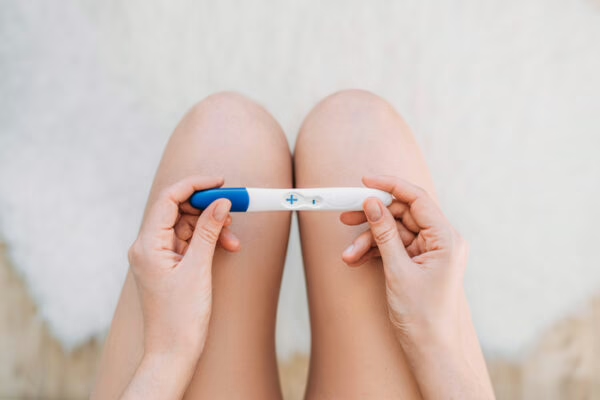
Link copied! Fertility issues are often shrouded in misconceptions, with many people attributing difficulties in conceiving solely to age or reproductive health. While it’s true that age and the health of the reproductive system play significant roles in fertility, these factors only scratch the surface of what can influence one’s ability to conceive. Fertility is a complex interplay of various bodily systems, environmental factors and lifestyle choices. Surprisingly, several conditions that might seem unrelated at first glance can significantly impact fertility. Understanding these lesser-known factors is crucial for those trying to conceive, as it can help identify and address potential obstacles more effectively. Here, we explore five conditions you might not know could affect fertility. 1. Thyroid Disorders The thyroid gland is a small but mighty organ crucial in regulating metabolism and hormone production, both essential for reproductive health. Thyroid disorders, such as hypothyroidism (underactive thyroid) and hyperthyroidism (overactive thyroid), can significantly impact fertility. In women, an underactive thyroid can lead to prolonged menstrual cycles, heavy periods, or even the absence of menstruation. This occurs because insufficient thyroid hormones interfere with the production of sex hormones like estrogen and progesterone. The resulting hormonal imbalance can prevent the maturation and release of eggs, hampering ovulation and making it difficult to conceive [1]. In men, though less common, low thyroid hormone levels can result in decreased testosterone levels, which are associated with erectile dysfunctions, delayed ejaculation and deteriorated semen quality [2]. Conversely, an overactive thyroid can cause irregular menstrual cycles and lighter, shorter periods in women. Excess thyroid hormones can accelerate metabolism and disrupt the normal balance of reproductive hormones such as follicle-stimulating hormone and luteinising hormone, leading to irregular ovulation or even the complete absence of ovulation [3]. In men, elevated thyroid hormone levels affect testosterone levels, thereby affecting testicular functions, semen volume and quality [4]. In TCM, thyroid disorders are often linked to imbalances in Yin and Yang. Hypothyroidism is often associated with Yang deficiency, which leads to a dip in overall Qi and energy levels. This imbalance can manifest as fatigue, sensitivity to cold and constipation. On the other hand, hyperthyroidism is attributed to Yin deficiency, resulting in a dehydrated body constitution with symptoms such as dry skin and eyes, heart palpitations and weight loss. TCM offers a holistic approach to regulating thyroid function and improving overall fertility through personalised herbal medication and acupuncture. Herbal formulas are tailored to each individual’s needs, nourishing Yin or Yang as required, while acupuncture helps harmonise the body’s energy flow, promoting optimal thyroid health and enhancing fertility. Tech-enhanced therapies like Electro-Lymphatic Therapy (ELT) help stimulate lymphatic flow to improve circulation and regulate the flow of hormones while Cell Pro Therapy introduces reducing electrons into the body, helping to improve cellular metabolism and oxygenation, further supporting thyroid health. With this comprehensive approach, individuals can achieve a better hormonal balance, paving the way for improved reproductive health and increased chances of conception. 2. Polycystic Ovary Syndrome (PCOS) Polycystic Ovary Syndrome (PCOS) is a hormonal disorder that is becoming increasingly more common, affecting an estimated 8–13% of women of reproductive age, with up to 70% of cases remaining undiagnosed [5]. PCOS is characterised by irregular menstrual cycles, excess androgen levels and polycystic ovaries. Women with PCOS may have elevated levels of hormones such as estrogen, luteinising hormone and anti-müllerian hormone. These hormones regulate menstruation and ovulation by controlling the growth of the uterine lining and triggering ovulation. Disruptions in these hormone levels interfere with ovulation, making it difficult to conceive [6]. In TCM, PCOS is associated with Phlegm-Dampness accumulation and Blood stagnation. A modern sedentary lifestyle, combined with a diet high in processed and fatty foods, can impact our Spleen, or digestive system in TCM. This causes an uneven distribution of nutrients and fluids in our body, an accumulation Phlegm-Dampness, resulting in symptoms such as weight gain, oily skin and a lowered metabolism. Additionally, this accumulation can disrupt the flow of Blood, causing it to stagnate and accumulate in the womb, which affects reproductive organ function and creates a less-than-ideal environment for conception. Despite being one of the leading causes of infertility in women, PCOS can be managed with herbal medication, acupuncture and lifestyle modifications. Herbal medications are prescribed to address root issues, such as removing Phlegm-Dampness from the body, while acupuncture helps to regulate organ energy and hormone levels. Tech-enhanced therapies such as Electro-Lymphatic Therapy help promote smooth lymphatic flow, which boosts circulation and alleviates symptoms caused by Phlegm-Dampness. Improved lymphatic flow also helps regulate hormone levels and create a uterine environment that is more conducive for pregnancy. Together, TCM and tech-enhanced therapies work to regulate menstruation, balance hormone levels and increase the chances of getting pregnant. 3. Endometriosis Endometriosis is characterised by severe pain in the abdomen or lower back during menstruation. This condition occurs when tissue similar to the lining of the uterus grows outside the uterine cavity. Each month, when the uterine lining sheds during menstruation, this tissue outside the uterus also sheds into the abdomen, leading to severe pain, chronic inflammation and scar tissue formation. These scars can create adhesions between reproductive organs, distorting pelvic anatomy, including the fallopian tubes and ovaries. This distortion can interfere with the release and transport of eggs, hindering their journey to meet sperm for fertilisation. Additionally, the inflammatory environment created by endometriosis is hostile to sperm, eggs, and embryos, making fertilisation and implantation more challenging [7]. Endometriosis is often underdiagnosed because its symptoms can be mistaken for regular menstrual pain. Early diagnosis and treatment can significantly improve fertility outcomes for those trying to conceive. In TCM, endometriosis is associated with Blood stagnation in the womb. Blood stagnation can result from Qi stagnation, Cold accumulation or Dampness. These factors disrupt the normal flow of Qi and Blood, leading to pain and poor womb conditions for fertility TCM offers effective treatments for endometriosis through acupuncture and moxibustion, which help relieve pain, expel Cold, and balance uterine conditions. With a proper diagnosis, herbal medication can address underlying
