How Traditional Chinese Medicine (TCM) Treats Neck Pain Effectively
24 March, 2026
Key Takeaways
- Neck pain is commonly linked to poor posture, stress, prolonged screen use, and certain body constitutions, such as Qi stagnation or Cold-Dampness, which often present as neck stiffness or chronic neck pain.
- Traditional Chinese Medicine (TCM) helps alleviate neck discomfort through techniques such as Acupuncture, Cupping, Moxibustion, and tech-enhanced therapies like Electro-Lymphatic Therapy (ELT) and Cell Pro Therapy (CPT).
- Self-care practices such as regular stretching, heat therapy, and maintaining good posture can complement TCM treatments and support long-term management.
Introduction
What Causes Neck Pain?
In TCM, neck pain is often attributed to imbalances in the flow of Qi and Blood. These imbalances can be the result of:
- Qi stagnation and poor blood circulation: When Qi and Blood do not flow smoothly through the body, tension and pain can arise in the neck and shoulder area[1].
- External factors like Cold, Wind, and Dampness: Environmental influences are believed to invade the body and cause muscle stiffness, especially in those with weakened immunity or Qi Deficiency[2].
- Emotional stress: Anxiety, frustration, and tension can lead to stagnated energy flow, which may present as tightness and discomfort in the neck region[3].
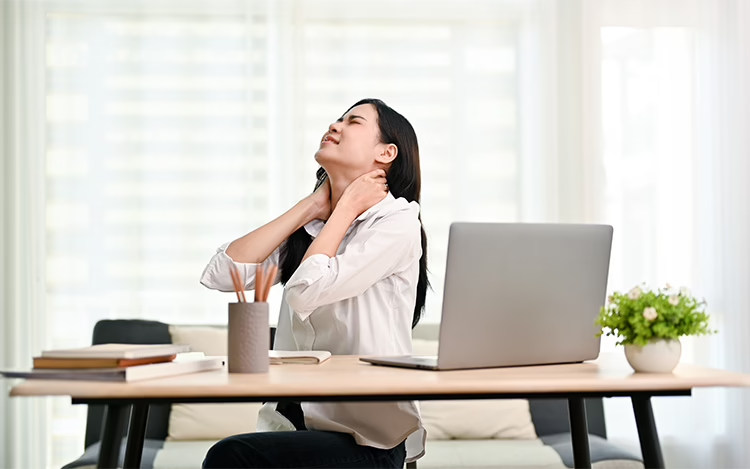
In modern lifestyles, daily habits such as prolonged screen use and poor posture can further contribute to these internal imbalances, worsening work-related neck pain over time. Beyond internal imbalances, postural strain is another common contributor to chronic neck pain[4] and neck and shoulder tension. This often arises from prolonged screen use, slouched sitting positions, or improper ergonomics that place strain on the neck and upper back over time.
TCM Treatments for Neck Pain Relief
In TCM, the choice of treatment for neck pain depends on the underlying cause, such as tension, poor circulation, or Cold-Dampness accumulation, rather than symptoms alone.
1. Acupuncture
Acupuncture in TCM involves inserting fine needles into specific points along meridians to relieve neck stiffness and address pain-related imbalances. Depending on the condition and underlying diagnosis, needles are placed in local areas around the neck and shoulders, or distal points such as the abdomen, hands, or feet. This therapy aims to:
- Stimulate the circulation of Qi and Blood
- Reduce inflammation
- Release muscle tension[5]
2. Moxibustion
Moxibustion is a TCM therapy that involves burning dried mugwort to warm and unblock meridians. This helps improve circulation and address pain caused by Cold-Damp constitutions[6], which refers to discomfort that tends to worsen in cold environments or presents with a heavy, achy sensation. Moxibustion is often combined with other TCM therapies for neck pain, such as acupuncture, as part of a holistic approach.
3. Cupping Therapy
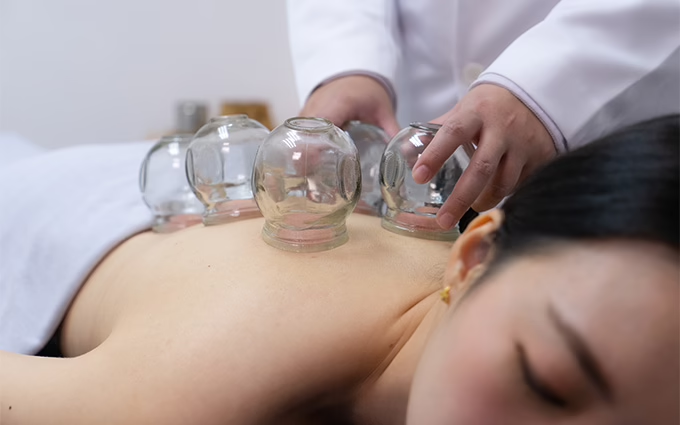
- Address both acute and recurring neck discomfort
- Encourage natural muscle relaxation[7]
- Release tightness and stagnation in the affected areas
4. Electro-Lymphatic Therapy (ELT)
5. Cell Pro Therapy (CPT)
Self-Care Tips for Managing Neck Pain
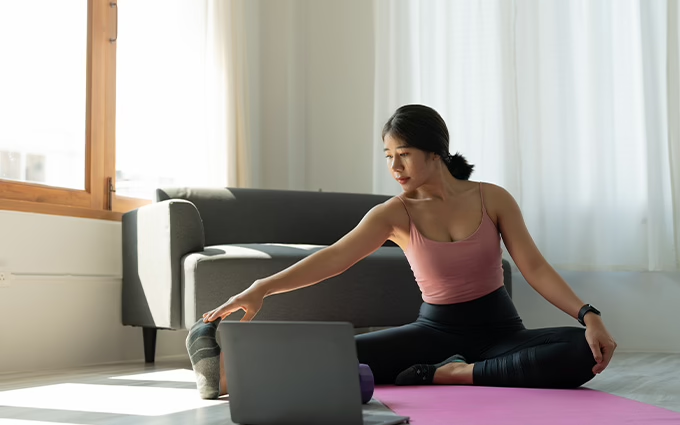
In addition to visiting a TCM clinic in Singapore, adopting simple self-care habits can further support treatment outcomes:
- Stretching exercises: Gentle neck rolls and shoulder stretches may improve flexibility and relieve neck stiffness caused by prolonged inactivity. This may also help reduce neck and shoulder tension linked to extended periods of sitting or screen use.
- Heat therapy: Applying a warm compress to the neck area can help relax tight muscles and encourage circulation, which may help ease discomfort in the neck region[11].
- Posture awareness: Maintain good ergonomics while working and minimise prolonged phone use to reduce unnecessary strain on the neck and upper back, lowering the risk of recurring stiffness and tension.
These self-care measures work best when combined with personalised TCM treatments provided by a qualified physician.
Conclusion
Neck pain, be it work-related or chronic, isn’t something you need to live with. TCM takes a root-cause focused approach that considers both the symptoms and the underlying patterns contributing to your discomfort. Whether the tension stems from stress, posture-related stiffness, or ongoing strain, TCM treatments and tech-enhanced therapies can provide lasting relief for daily comfort.
For personalised care, our physicians at Oriental Remedies Clinic combine Traditional Chinese Medicine with tech-enhanced therapies tailored to your needs. Through treatments such as acupuncture, Electro-Lymphatic Therapy (ELT) and Cell Pro Therapy (CPT), we work to ease tension, improve mobility, and support a more comfortable daily life.
Get in touch with us today.
This article is written by Physician Poh Jin En (Jesslyn) and Physician Kok Sam E (Amanda), registered TCM physicians certified by the Traditional Chinese Medicine Practitioners Board (TCMPB).

POH JIN EN (JESSLYN)
Physician
After graduating from the Biomedical Sciences and Traditional Chinese Medicine double degree programme at Nanyang Technological University, Physician Poh joined Oriental Remedies Group (ORG) and embarked on her career as a physician. The ideology of ORG, which focuses on combining TCM with technology, inspired her to explore how tech-enhanced treatments can supplement TCM and help patients recover faster.

KOK SAM E (AMANDA) Physician
A graduate of the double degree programme of Biomedical Sciences and Traditional Chinese Medicine at Nanyang Technological University, Physician Kok strongly believes in the combination of TCM and technology-enhanced therapies to help patients recover faster. Drawing from diverse internships under esteemed TCM physicians in Beijing, Singapore, and Malaysia, she developed a keen interest in mental wellness, pain management and dermatological conditions.
Note: all words in Italics mentioned henceforth refer to the TCM organ system and not the anatomical organs/terms referenced in Western medicine.
Disclaimer:
The content on this page is for information and educational purposes only. Such medical information may relate to disease, injury, drugs, and other treatments, medical devices, and/or health products. Medical information does not amount to advice, and if advice is needed an appropriate professional help should be sought. The disclaimer asserts that no warranties or representations are given in respect of the medical information and that the website operator should not be held liable if a user suffers any injury or loss after relying upon the medical information
Any devices used for technology-enhanced therapies are intended for use only for general well-being purposes or to encourage or maintain a healthy lifestyle, and is not intended to be used for any medical purpose (such as the detection. diagnosis, monitoring, management or treatment of any medical condition or disease). Any health-related information provided by this device or software should not be treated as medical advice.
References:
[1] 马芬. (2023). Research progress in traditional Chinese medicine for cervicogenic headache. Advances in Clinical Medicine, 13(09), 13874–13879. https://doi.org/10.12677/acm.2023.1391939
[2] http://www.zgyydb.ac.cn/zgyydb/article/html/202422023
[3] https://www.apa.org/topics/stress/body
[4] Subbarayalu, A. V., & Ameer, M. A. (2017). Relationships among head posture, pain intensity, disability and deep cervical flexor muscle performance in subjects with postural neck pain. Journal of Taibah University Medical Sciences, 12(6), 541–547. https://doi.org/10.1016/j.jtumed.2017.07.001
[5] Lin, J. G., Kotha, P., & Chen, Y. H. (2022). Understandings of acupuncture application and mechanisms. American Journal of Translational Research, 14(3), 1469–1481.
[6] Deng, H., & Shen, X. (2013). The mechanism of moxibustion: ancient theory and modern research. Evidence-Based Complementary and Alternative Medicine: eCAM, 2013, 379291. https://doi.org/10.1155/2013/379291
[7] Mehta, P., & Dhapte, V. (2015). Cupping therapy: A prudent remedy for a plethora of medical ailments. Journal of Traditional and Complementary Medicine, 5(3), 127–134. https://doi.org/10.1016/j.jtcme.2014.11.036
[8] Doubblestein, D. A., Sublett, S. H., & Huang, M. (2020). Effects of Manual Lymphatic Drainage Techniques on Conditions Affecting the Musculoskeletal System: A Systematic Review.
[9] 伊藤俊一, 菊本東陽, 白土修 他. 北海道大学医学部附属病院における電界光線治療器SELの血液pHと末梢循環血流量に及ぼす効果. 全国マイナスイオン医学会誌. 1997; 1(2): 25-6.
[10] Oschman JL. Can electrons act as antioxidants? A review and commentary. J Altern Complement Med. 2007 Nov;13(9):955-67. doi: 10.1089/acm.2007.7048. PMID: 18047442.
[11] Zanoli, G., Albarova-Corral, I., Ancona, M., Grattagliano, I., Hotfiel, T., Iolascon, G., Krüger, K., & Rodríguez Maruri, G. (2024). Current Indications and Future Direction in Heat Therapy for Musculoskeletal Pain: A Narrative Review. Muscles (Basel, Switzerland), 3(3), 212–223. https://doi.org/10.3390/muscles3030019