Why Office Stress Affects Your Training Recovery and Performance
28 April, 2026
Key Takeaways
- The impact of office stress is multifaceted. It affects circulation, digestion, sleep, and energy levels, which may slow down recovery and reduce physical performance over time
- Persistent mental load and prolonged sitting may lead to tension, fatigue, and slower muscle repair.
- In Traditional Chinese Medicine (TCM), these patterns are often linked to Liver Qi Stagnation, Spleen Qi Deficiency, and the body’s reduced ability for rest and recovery.
- Simple lifestyle habits such as regular movement, warm meals, and consistent sleep routines may support recovery.
- TCM treatments, such as Acupuncture, Tuina, herbal medicine, and tech-enhanced therapies, can support recovery.
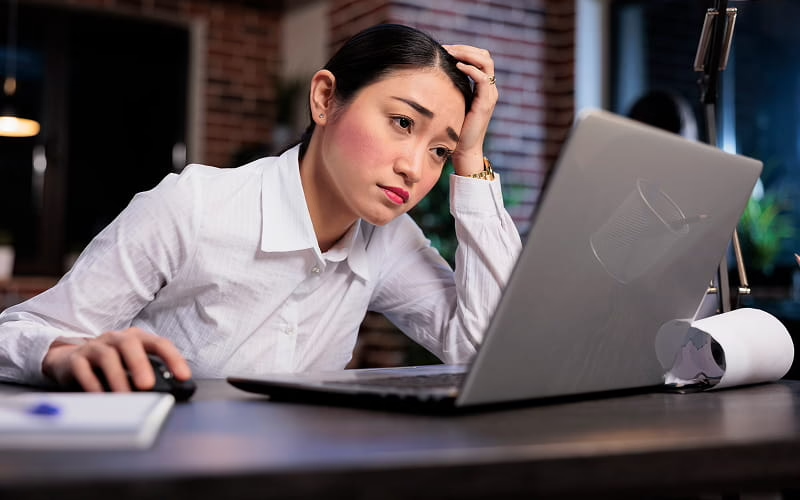
Modern office work may not feel physically demanding, yet many people notice that long days at the desk leave them unusually tired, stiff, or sluggish. Prolonged mental focus, extended sitting, irregular meals, and disrupted sleep can quietly place continuous strain on the body, affecting how well it recovers and repairs itself over time.
In this article, we explore the link between office stress and recovery from a TCM perspective, and the supportive therapies that can help restore balance.
How Does Modern Office Stress Affect Your Body?
1. Persistent Mental Load and Liver Qi Stagnation
Constant mental stimulation is a common driver of stress today[1]. Notifications, multitasking, and performance pressure keep the mind engaged throughout the day, preventing the nervous system from fully settling. Over time, this persistent mental load can create tension that extends beyond the mind and into the body.
In TCM, emotional stress is often associated with Liver Qi Stagnation[2]. The Liver is responsible for maintaining the smooth flow of Qi throughout the body. When stress disrupts this flow, Qi may stagnate, leading to tightness in areas such as the neck, shoulders, and chest. This also affects Blood circulation, reducing the delivery of nutrients and oxygen needed for muscle recovery.
2. Sedentary Routines, Dampness, and Reduced Circulation
Sedentary work and lifestyle routines can affect health and recovery. Sitting for long periods restricts movement and slows circulation[3] across the neck, back, hips, and legs. Even if a person exercises after work, extended inactivity during the day may affect the body’s rate of recovery.
In TCM, the Spleen governs the muscles[4]. When muscles remain inactive for many hours, Qi circulation slows, and stagnation may develop. This stagnation can contribute to what TCM describes as Dampness, a heavy and sluggish imbalance within the body, causing stiffness, heaviness, or reduced responsiveness during exercise.
3. Stress, Digestion, and Spleen Qi Deficiency
The impact of modern stress also extends to your digestive system[5]. Busy workdays often involve skipped meals, rushed lunches, or eating while responding to emails. Over time, these habits may disrupt digestive function and reduce the body’s ability to convert food into usable energy.
The Spleen is responsible for transforming food into Qi and Blood, which nourish the body and support tissue repair. Excessive worry or mental strain can weaken this system, leading to what practitioners refer to as Spleen Qi Deficiency[4]. This can affect the body’s production of “Gu Qi”, or food-derived energy, leading to symptoms such as bloating, brain fog, or heaviness in the limbs. Over time, this may reduce the body’s capacity to repair and recover, making workouts feel more taxing than usual.
4. Sleep Disruption and Depletion of Yin and Essence
Sleep is one of the body’s most important recovery processes, yet it is often disrupted by work-related stress. Late-night screen use, unfinished tasks, and racing thoughts can make it difficult to achieve restful sleep.
Sleep is also closely linked to the restoration of Yin, the body’s cooling and nourishing energy. When sleep quality declines, the body may not fully replenish the resources needed to support recovery. Over time, chronic stress and fatigue may also draw upon deeper reserves known as Kidney Essence (Jing)[6]. When this energy becomes strained, resilience can decline. As a result, it may take longer to recover from physical exertion or minor illnesses.
Lifestyle Adjustments That Support Recovery

To reduce the impact of modern stress, TCM practitioners recommend several daily adjustments and habits that can help restore your body’s rhythm and circulation.
1. Protect the “Golden Window” of Sleep
Sleeping earlier can help restore your energy reserves and support physical recovery. Particularly, the period between 11:00 PM and 3:00 AM is considered an important window for restoration, when the Liver and Gallbladder are believed to regulate circulation and support the body’s natural repair processes. Sleeping before 11:00 PM may allow the body to move through these cycles more smoothly and reduce the impact of stress.
2. Break Stagnation With Micro-Movements
Avoid sitting for long periods by introducing short movement breaks. This will help keep your Qi and Blood circulating. TCM practitioners recommend simple exercises, such as:
- Qi Shake: Involves gently shaking the hands, arms, and legs for about a minute to release accumulated tension and encourage circulation.
- Sky Reach: Interlace the fingers and extend the arms upwards to help open the chest, improve posture, and reduce stiffness.
3. Support Digestion With Warm, Regular Meals
- Choosing warm, nourishing foods like soups, stews, or congee places less strain on the digestive system[7].
- Maintaining consistent mealtimes and choosing cooked foods to sustain energy levels throughout the day.
- Drinking warm water or ginger tea helps support the body’s “Digestive Fire” (命门), allowing it to better absorb the nutrients needed for muscle and nerve recovery.
4. Create a Mental Wind-Down Routine
To help your mind settle in at night, establish a simple wind-down routine in the evening. Writing down your tasks or concerns for the next day can help reduce mental clutter and allow the nervous system to relax before sleep.
After lying down, close your eyes and practice deep belly breathing. This allows your Qi to return to the Dan Tian (丹田), your body’s centre of energy, rather than being scattered outward through your senses.
Complementing Self-Care With TCM Treatments
When stress-related fatigue or tension persists, consider exploring complementary support at a TCM clinic in Singapore. Physicians may recommend a combination of therapies tailored to each individual’s symptoms, lifestyle patterns, and overall health goals.
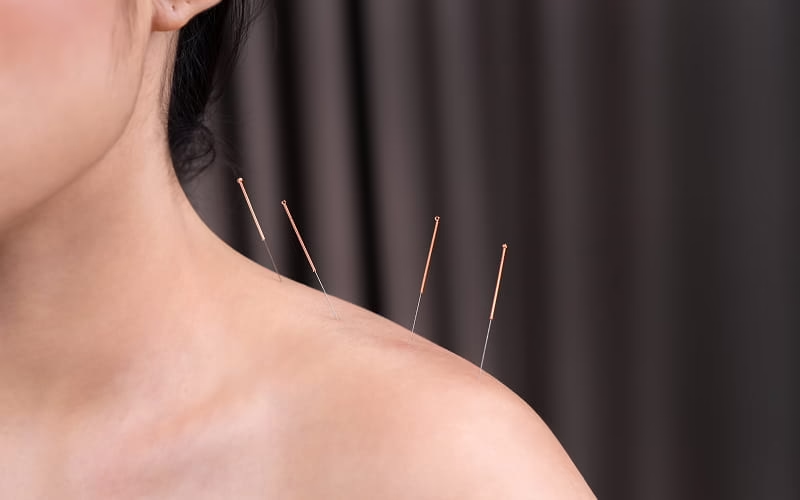
In Acupuncture, practitioners place ultra-thin needles at specific points along the body’s meridians to regulate the movement of Qi. Commonly used points may include:
- Tai Chong (太冲): Often used to help release Liver Qi stagnation and ease stress-related tension.
- Zu San Li (足三里): Used to support digestive function and help the body generate energy from food.
- Yin Tang (印堂): Located between the eyebrows, Acupuncture at this point can help calm the mind and support relaxation.
By improving circulation and helping the body shift into a more restorative state, Acupuncture can assist in relieving muscle tension. For individuals experiencing stiffness or slow recovery after training, it may be introduced as part of a broader recovery plan.
Tuina is a therapeutic manual therapy that works on soft tissues and meridian pathways throughout the body. It is often recommended for individuals who spend long hours at a desk and experience stiffness or discomfort from repetitive postures.
Through targeted pressure and rhythmic manipulation, Tuina aims to improve local circulation and release muscular tension[8]. By addressing areas such as the neck, shoulders, and lower back, the therapy can help restore mobility and support recovery from both daily strain and physical activity.
While Acupuncture is used to move Qi, herbs can help build and replenish the body’s resources. For example, in cases of patterns such as Empty Heat or Blood Deficiency, regulating energy alone may not be sufficient if the body’s reserves need replenishment.
When stress affects digestion, circulation, or energy levels, herbal formulations may be prescribed to support Qi movement, strengthen digestive function, and nourish Blood. Prescriptions are typically customised according to each individual’s constitution and current health presentation.
Electro-Lymphatic Therapy (ELT) is a tech-enhanced therapy used to support lymphatic circulation[9]. The therapy involves the use of handheld glass probes that deliver high-frequency, low-current energy to the lymphatic system. This helps break up “congealed Dampness” from prolonged sitting, which can cause swelling, heavy limbs, and brain fog.
Cell Pro Therapy (CPT) supports your body at the cellular level. By delivering electrons into the body, CPT enhances blood circulation, helping Qi flow smoothly and releasing the tension across the neck, shoulders and chest. Additionally, reducing electrons also helps neutralise oxidative stress[10], reducing the strain placed on the Spleen and helping to relieve the heaviness associated with Spleen Qi Deficiency.
Supporting Holistic Recovery in a High-Stress Work Environment
In today’s fast-paced work culture, many people focus on training harder without recognising how daily stress and work habits can affect recovery. When mental load, prolonged sitting, irregular routines, and poor sleep accumulate, the body may struggle to restore energy and repair itself effectively.
At Oriental Remedies Clinic, our TCM physicians take a holistic approach to supporting recovery and managing the impact of stress on your body. Through personalised consultations and integrative TCM treatments, we work alongside you to support recovery and help you maintain long-term resilience in both work and training. Get in touch with us today to learn more.
This article is written by Physician Tan Shuen Yun (Jasmine), registered TCM physicians certified by the Traditional Chinese Medicine Practitioners Board (TCMPB).
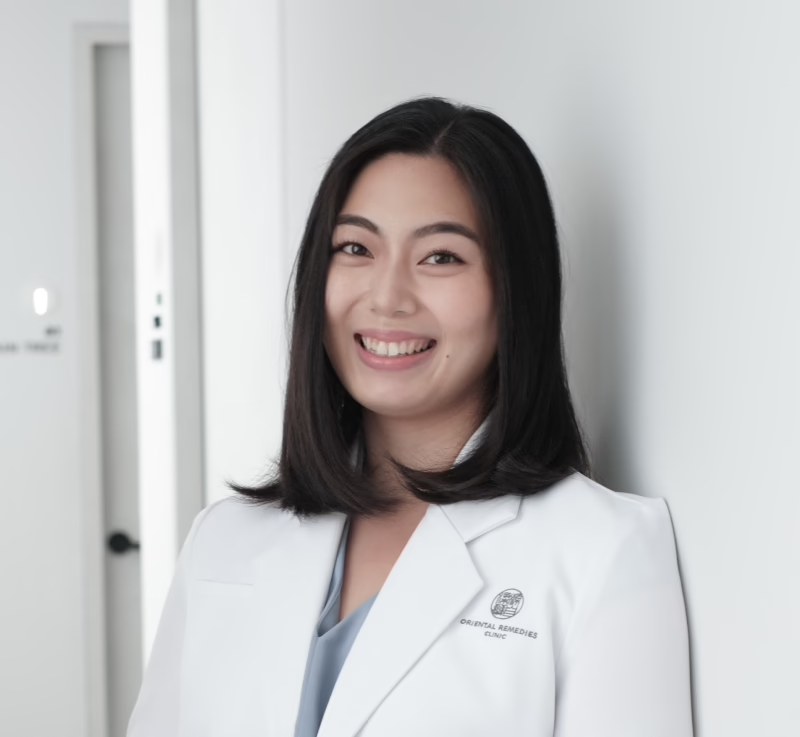
Tan Shuen Yun (Jasmine)
Physician
Physician Tan graduated from Nanyang Technological University with a double degree in Biomedical Science and Traditional Chinese Medicine. During her internship with Dongfang Hospital in Beijing, she witnessed how patients benefited greatly from TCM both as a primary treatment and as a complement to Western treatments. Inspired by this experience, she is committed to spreading the benefits of TCM to Singaporeans through her work as a physician.
Note: all words in Italics mentioned henceforth refer to the TCM organ system and not the anatomical organs/terms referenced in Western medicine.
Disclaimer:
The content on this page is for information and educational purposes only. Such medical information may relate to disease, injury, drugs, and other treatments, medical devices, and/or health products. Medical information does not amount to advice, and if advice is needed an appropriate professional help should be sought. The disclaimer asserts that no warranties or representations are given in respect of the medical information and that the website operator should not be held liable if a user suffers any injury or loss after relying upon the medical information
Any devices used for technology-enhanced therapies are intended for use only for general well-being purposes or to encourage or maintain a healthy lifestyle, and is not intended to be used for any medical purpose (such as the detection. diagnosis, monitoring, management or treatment of any medical condition or disease). Any health-related information provided by this device or software should not be treated as medical advice.
References:
[1] Hasan, M. K. (2025). Meta-stress in the digital age: how social media and constant connectivity create new layers of stress. Annals of Medicine and Surgery, 87(9), 5364–5367. https://doi.org/10.1097/ms9.0000000000003515
[2] Wei, Y., Wang, T., Wu, H., Huang, Y., Wu, M., Zheng, M., Zhou, R., Wang, Q., & Zhao, Y. (2018). Biological mechanisms underlying the liver’s regulation of emotions in women: A study using the Trier Social Stress Test. Journal of Traditional Chinese Medical Sciences, 5(2), 110–118. https://doi.org/10.1016/j.jtcms.2018.03.003
[3] Restaino, R. M., Holwerda, S. W., Credeur, D. P., Fadel, P. J., & Padilla, J. (2015). Impact of prolonged sitting on lower and upper limb micro- and macrovascular dilator function. Experimental physiology, 100(7), 829–838. https://doi.org/10.1113/EP085238
[4] Wu X. N. (1998). Current concept of Spleen-Stomach theory and Spleen deficiency syndrome in TCM. World journal of gastroenterology, 4(1), 2–6. https://doi.org/10.3748/wjg.v4.i1.2
[5] Ahmed, F., Alhodieb, F. S., Alsanie, S. A., Rasheed, M., & Ndagire, C. T. (2025). Relationship between stress, diet, and gut microbiota: a cross-sectional study. Nutrition & metabolism, 22(1), 122. https://doi.org/10.1186/s12986-025-01014-y
[6] Liu 刘茜玮, Q., Zhao 赵国桢, G., Ji 嵇波, B., Liu 刘翼天, Y., Zhang 张靖宇, J., Mou 牟秋杰, Q., & Shi 石天宇, T. (2020). Analysis of the Influence of the Psychology Changes of Fear Induced by the COVID-19 Epidemic on the Body. World journal of acupuncture-moxibustion, 10.1016/j.wjam.2020.06.007. Advance online publication. https://doi.org/10.1016/j.wjam.2020.06.007
[7] Wu, T., Ramesh, N., Doyle, C., & Hsu, F. (2025). Cold and hot consumption and health outcomes among US Asian and White populations. British Journal of Nutrition, 134(8), 645–659. https://doi.org/10.1017/s000711452510514x
[8] Yang, M., Feng, Y., Pei, H., Deng, S., Wang, M., Xiao, X., Zheng, H., Lai, Z., Chen, J., Li, X., He, X., & Liang, F. (2014). Effectiveness of Chinese massage therapy (Tui Na) for chronic low back pain: study protocol for a randomized controlled trial. Trials, 15, 418. https://doi.org/10.1186/1745-6215-15-418
[9] Doubblestein, D.A., Sublett, S.H., & Huang, M. (2020). Effects of Manual Lymphatic Drainage Techniques on Conditions Affecting the Musculoskeletal System : A Systematic Review.
[10] Oschman JL. Can electrons act as antioxidants? A review and commentary. J Altern Complement Med. 2007 Nov;13(9):955-67. doi: 10.1089/acm.2007.7048. PMID: 18047442.