Supporting Sports Injury and Recovery with TCM
15 April, 2026
Key Takeaways
- Take a holistic approach to sports injury recovery and rehabilitation with Traditional
- Chinese Medicine (TCM). It focuses on restoring the body’s internal balance and supporting the body’s natural healing process.
- Physicians use techniques such as Acupuncture and Cupping to help patients manage pain, reduce inflammation, and relieve muscle tension.
- As part of a comprehensive rehabilitation plan, tech-enhanced therapies like Electro-Lymphatic Therapy (ELT) and Cell Pro Therapy (CPT) can support lymphatic flow and soft tissue recovery.
The Role of TCM in Sports Injury Rehabilitation
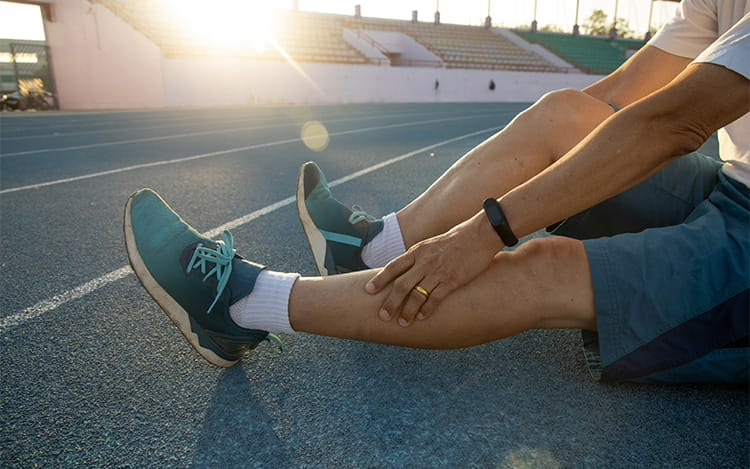
Whether you’re a professional athlete, a weekend runner, or simply someone who enjoys staying active, sports injuries[1] can be a frustrating setback. They not only impact your performance and routine but may also affect your overall well-being if not addressed early.
In this article, we explore how TCM in Singapore, supported by tech-enhanced therapies, aids in sports injury management, provides natural pain relief, and reduces the risk of recurrence.
What are the Different Types of Sports Injuries?
Understanding the nature of a sports injury is the first step toward appropriate recovery. Injuries generally fall into two main categories[1]:
- Acute: Occurs suddenly, often due to direct trauma such as a fall, collision, or improper movement (e.g. an ankle sprain or muscle tear).
- Chronic: Develops gradually over time, typically from overuse or repetitive stress (e.g. runner’s knee or tendinitis).
Some examples of musculoskeletal injuries commonly experienced by athletes include:
- Muscle strains and sprains
- Tendinitis (inflammation of a tendon)
- Fractures or dislocations
- Bursitis (inflammation of small, fluid-filled sacs cushioning the spaces between bones, tendons, and muscles near the joints)
Early attention and consistent care are key to managing both acute and chronic conditions.
What Happens If You Leave Sports Injuries Untreated
Leaving a sports injury unaddressed may lead to further complications over time, such as:
- Chronic Pain and Impaired Function: When not treated properly, acute and overuse sports injuries can develop into persistent pain that may interfere with daily activities[2].
- Qi and Blood Stasis: In TCM, physical trauma can obstruct the circulation of Qi and Blood, leading to lingering pain and stiffness. As Qi and Blood are vital sources of energy and nourishment for the body, this blockage may deprive surrounding areas of these essentials, contributing to radiating pain, numbness or discomfort beyond the initial site of injury[3].
- Dampness Accumulation: Untreated sports injuries disrupt circulation and cause persistent pain, often leading to a cycle of inactivity to avoid further discomfort. Reduced movement further slows the circulation of Qi and Blood, creating conditions for Dampness (excess internal moisture) to accumulate, especially in the lower limbs[3]. This buildup may contribute to prolonged swelling, joint issues and slower recovery.
- Meridian Disruption: Meridians run throughout the body, carrying Qi and Blood to nourish tissues and support Organ function. Injuries can damage or obstruct these pathways, impairing circulation along the affected meridians. When meridian flow is disrupted, it may lead to local pain and cause symptoms or issues that manifest along the same meridian pathways.[4]
How TCM Can Help Support Sports Injury and Recovery
While Western medicine often focuses on diagnosing the physical injury and managing symptoms, TCM takes a holistic approach to injury rehabilitation therapy. TCM physicians will assess not only the injury site but also patterns of Qi, Blood, and Organ function to craft a personalised treatment plan:
1. Pain Relief and Inflammation Reduction
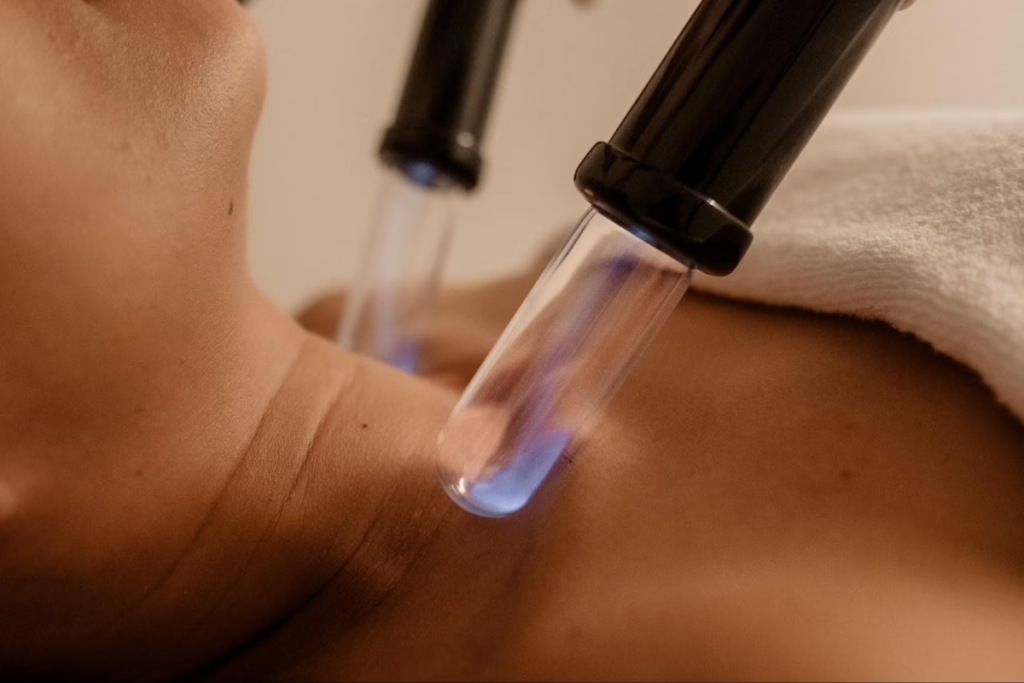
Acupuncture is a TCM technique that involves inserting fine needles at specific points to encourage circulation and reduce inflammation. It can also be used to encourage the release of endorphins[5], which are natural chemicals that help reduce discomfort[6].
At Oriental Remedies Clinic, Electro-Lymphatic Therapy (ELT) can also be used as a complementary therapy for sports injuries. This tech-enhanced therapy is designed to stimulate lymphatic flow and support the body’s natural detoxification processes, which helps address post-injury swelling and inflammation[7].
2. Muscle and Tissue Repair

TCM also addresses musculoskeletal concerns through techniques such as Cupping. This method involves placing heated glass cups on the skin to create suction, supporting circulation and relieving muscle tension[8]. Cupping is commonly used in cases that involve muscular tightness, overuse, or repetitive strain.
Cell Pro Therapy (CPT) is another option commonly included in injury rehabilitation plans at Oriental Remedies Clinic. This non-invasive therapy delivers negatively charged ions to the body through electrode plates placed on targeted areas to support cellular repair and recovery. This process helps to support the healing of muscles, tendons, and ligaments[9].
TCM: A Holistic Approach to Sports Recovery
Recovering from a sports injury often requires time, consistency, and a well-rounded support system. TCM offers a personalised, whole-body approach that focuses on internal balance and incorporates tech-enhanced therapies such as ELT and CPT. Whether you are seeking TCM treatments for back pain or a sprained ankle, these therapies can contribute to a more comprehensive and sustainable recovery.
At Oriental Remedies Clinic, we provide care that draws from both traditional wisdom and modern practices. Our bilingual team of physicians are trained in Biomedical Science and TCM, enabling an integrative approach that complements traditional care with tech-enhanced therapies when developing treatment plans tailored to your individual needs.
Have questions or concerns? Book a consultation to get a personalised recovery plan.
This article is written by Physician Tan Boon Han, registered TCM physicians certified by the Traditional Chinese Medicine Practitioners Board (TCMPB).
Tan Boon Han
Physician
Note: all words in Italics mentioned henceforth refer to the TCM organ system and not the anatomical organs/terms referenced in Western medicine.
Disclaimer:
The content on this page is for information and educational purposes only. Such medical information may relate to disease, injury, drugs, and other treatments, medical devices, and/or health products. Medical information does not amount to advice, and if advice is needed an appropriate professional help should be sought. The disclaimer asserts that no warranties or representations are given in respect of the medical information and that the website operator should not be held liable if a user suffers any injury or loss after relying upon the medical information
Any devices used for technology-enhanced therapies are intended for use only for general well-being purposes or to encourage or maintain a healthy lifestyle, and is not intended to be used for any medical purpose (such as the detection. diagnosis, monitoring, management or treatment of any medical condition or disease). Any health-related information provided by this device or software should not be treated as medical advice.
References:
[1] https://www.niams.nih.gov/health-topics/sports-injuries
[2] https://share.upmc.com/2023/07/dealing-with-pain-from-old-sports-injuries/
[3] Zhang, H., Zhao, M., Wu, Z., Wang, X., Jiang, Y., Liang, J., & Chen, H. (2022). Effects of acupuncture, moxibustion, cupping, and massage on sports Injuries: A Narrative review. Evidence-based Complementary and Alternative Medicine, 2022, 1–10. https://doi.org/10.1155/2022/9467002
[5] Han, J. (2004). Acupuncture and endorphins. Neuroscience Letters, 361(1–3), 258–261. https://doi.org/10.1016/j.neulet.2003.12.019
[6] Zhang, A., An, X., Xu, S., Chang, J., & Mo, W. (2021). ENDORPHINS AND ACUPUNCTURE ANALGESIA. Chinese Medical Journal. https://mednexus.org/doi/epdf/10.5555/cmj.0366-6999.93.10.p673.01
[7] Vairo, G. L., Miller, S. J., McBrier, N. M., & Buckley, W. E. (2009). Systematic review of efficacy for manual lymphatic drainage techniques in sports medicine and rehabilitation: an evidence-based practice approach. The Journal of manual & manipulative therapy, 17(3), e80–e89. https://doi.org/10.1179/jmt.2009.17.3.80E
[8] Kim, J., Cho, J., Do, K., Lim, S., Kim, H., & Yim, J. (2017). Effect of cupping therapy on range of motion, pain threshold, and muscle activity of the hamstring muscle compared to passive stretching. Journal of the Korean Society of Physical Medicine, 12(3), 23–32. https://doi.org/10.13066/kspm.2017.12.3.23
[9] Ho, C., Lee, M., Chang, C., Chen, W., & Huang, W. (2020). Beneficial effects of a negative ion patch on eccentric Exercise-Induced muscle damage, inflammation, and exercise performance in badminton athletes. The Chinese Journal of Physiology, 63(1), 35–42. https://doi.org/10.4103/cjp.cjp_33_19