
Trying to Conceive? Here’s How Traditional Chinese Medicine Can Boost Your Fertility

29 June, 2026
Key Takeaways
- Trying to conceive can be complex, and Traditional Chinese Medicine (TCM) offers a holistic approach that focuses on restoring internal balance rather than just addressing symptoms.
- TCM treatments, such as Acupuncture, herbal medicine, Moxibustion, and tech-enhanced therapies like Electro-Lymphatic Therapy (ELT) and Cell Pro Therapy (CPT), are used to support reproductive health and complement conventional fertility treatments.
- Common fertility concerns such as PCOS, endometriosis, and cycle irregularities are addressed in TCM through personalised treatment plans tailored to individual needs.
- TCM can support IVF, IUI, and egg freezing by improving circulation, reducing stress, supporting post-procedure recovery, and stabilising the implantation to help improve the chances of pregnancy.
- Starting TCM care 3–6 months before attempting to conceive, whether naturally or through ART, can help support long-term fertility and overall well-being.
Can TCM Help If You’re Trying to Conceive?
In recent years, more couples in Singapore are choosing to start families later in life, often due to career priorities, financial planning, and lifestyle considerations. At the same time, factors such as stress, poor sleep quality, metabolic imbalances, dietary habits, and environmental exposures can affect reproductive health.
For those trying to conceive, TCM offers a holistic approach to fertility by helping to regulate menstrual cycles, improve blood circulation to the reproductive organs, and reduce stress that can affect hormonal balance.
In Singapore, many couples use TCM alongside conventional treatments such as In-Vitro Fertilisation (IVF) or Intrauterine Insemination (IUI), or as part of a natural approach when trying to conceive. Treatment plans are personalised based on each individual’s body constitution, symptoms, and fertility goals.
In this article, we’ll explore how TCM can support your fertility journey, whether you’re trying to conceive naturally or looking to enhance conventional treatments.
What Causes Infertility?
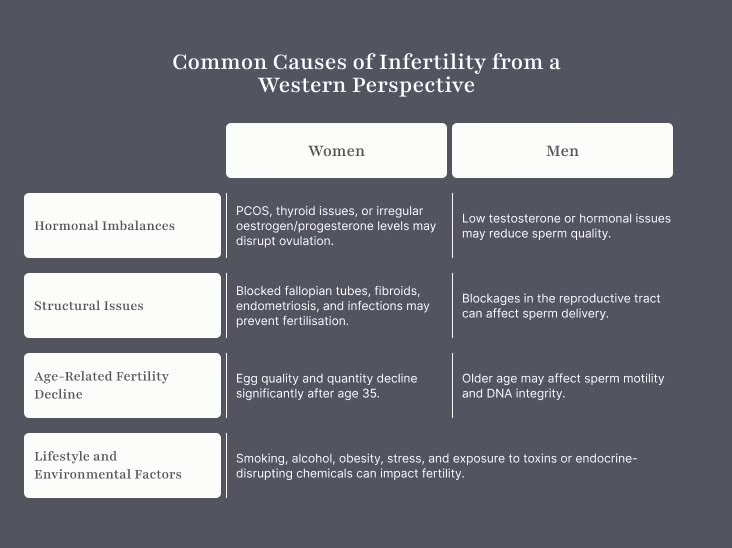
Common Causes of Infertility from a Western Perspective
Infertility is typically defined as the inability to conceive after 12 months of regular, unprotected intercourse[1]. For couples trying to conceive, a range of biological and environmental factors may affect one or both partners. From a Western medical perspective, these factors include:
TCM Perspective on Infertility

From a TCM perspective, fertility is closely linked to the balance of the Kidney, Liver, and Spleen. These systems influence reproductive function, blood flow, and emotional regulation; imbalances may affect the ability to conceive naturally.
Kidney Deficiency
In TCM, the Kidneys are fundamental to the body’s reproductive system. An imbalance in Yin or Yang energy in the Kidneys may affect fertility-related functions in both men and women.
- Kidney-Yin Deficiency may be associated with symptoms like scanty or absent menstruation[2] (hypomenorrhea or amenorrhea), night sweats, or sensations of heat. In men, it may manifest as low sperm count or decreased sperm quality.
- Kidney-Yang Deficiency is linked to Cold Womb Syndrome in women, which is a condition believed to restrict blood flow to the uterus and make implantation more difficult. This imbalance may also contribute to symptoms such as fatigue, sensitivity to cold, and decreased sexual function[2] in men.
Liver Qi Stagnation
The Liver is responsible for regulating the flow of Qi (vital energy) and Blood circulation[3], which are crucial for overall bodily functions. When Qi in the Liver becomes stagnant, often due to chronic stress, unresolved emotions, or an imbalanced lifestyle, it may manifest as:
- Irregular or painful menstruation
- Premenstrual syndrome (PMS)
- Mood swings or irritability
In men, this can be associated with poor sperm motility or sexual dysfunction, which may contribute to difficulties when trying to conceive.
Spleen Qi Stagnation
In TCM, the Spleen plays a key role in digestion and provides nutrients to all organ systems[4], including the reproductive organs. When Spleen Qi is deficient:
- Women may experience symptoms such as spotting, a thin uterine lining, or difficulty sustaining a pregnancy.
- Men may notice low energy levels or poor sperm quality.
This pattern may also lead to Dampness in the body, contributing to fluid retention, mucus buildup, and weight fluctuations, which can affect those trying to conceive.
These diagnostic patterns are typically identified through comprehensive consultations. During these sessions, our licensed TCM physicians will assess your physical symptoms, lifestyle habits, emotional well-being, and other contributing factors.
How TCM Complements Western Fertility Treatments?
Holistic fertility care often involves a combination of approaches, including conventional medical treatments and complementary support such as TCM.
Conventional medicine typically focuses on identifying and addressing specific physiological or biochemical causes of infertility. This may involve hormonal therapies, surgical interventions, or Assisted Reproductive Technology (ART) such as IVF and IUI. These approaches are often targeted and outcome-driven, aiming to influence ovulation, fertilisation, or implantation directly.
In contrast, TCM views the body as an interconnected whole. Rather than focusing only on reproductive organs, it recognises that broader patterns of internal balance influence reproductive health. From this perspective, TCM physicians take a holistic approach to fertility treatment, supporting those trying to conceive through a combination of therapies, herbal formulations, dietary adjustments, and lifestyle recommendations.
While TCM fertility care and conventional fertility treatments differ in approach, they are not mutually exclusive. Today, TCM is often used not as an alternative but as a supportive layer that helps patients cope better physically and emotionally throughout their fertility journey. Many couples in Singapore who are trying to conceive integrate both approaches, especially when navigating complex or unexplained challenges.
How Can TCM Support Fertility?

Boosting Your Chances of Natural Conception With TCM
- Regulating menstrual cycles and ovulation
- Improving blood circulation to the uterus and reproductive organs
- Supporting egg and sperm quality
- Reducing stress and supporting hormonal balance
- Preparing the body for natural conception or assisted treatments such as IVF
These benefits are achieved through a combination of therapies tailored to your individual condition and body constitution.
1. Promotes the Flow of Qi
For those trying to conceive, restoring the healthy flow of Qi is considered a foundational step in fertility and overall reproductive wellness. When Qi becomes stagnant, commonly due to stress, poor diet, or lack of rest, it can disrupt menstrual patterns, affect hormone levels, and contribute to fertility challenges[5].
TCM therapies such as Acupuncture can enhance the flow of Blood and Qi, depending on the patient’s unique condition and body constitution. For example, Acupuncture needles may be inserted at specific points along the Liver meridian to address Liver Qi stagnation. This technique is believed to help regulate emotional stress, ease physical tension, and support more consistent menstrual cycles[6]. This can be crucial for enhancing reproductive balance and chances of conception.
2. Addresses Dampness, Blood Stasis and Coldness
In TCM, internal imbalances such as Dampness, Blood Stasis, and Internal Cold are believed to interfere with reproductive function by disrupting the flow of Qi and Blood, especially to the pelvic and abdominal regions. These imbalances are believed to contribute to issues such as irregular menstruation, discomfort, and reduced fertility potential.

To address these imbalances, TCM uses a combination of herbal medicine, Moxibustion, and dietary changes. Moxibustion, for example, is a therapy that involves placing burning dried mugwort on various points of the body to stimulate Qi and warm the lower abdomen. This is particularly helpful for individuals suffering from Cold Womb Syndrome. Herbal remedies like Coix seed and poria mushrooms may also be prescribed to drain excess Dampness[7], depending on the individual’s underlying pattern.
These therapies aim to support internal balance and strengthen the body’s constitution for couples trying to conceive naturally.
3. Supports Sexual Vitality and Reproductive Energy
- Kidney-tonifying herbal formulas that are designed to support vitality and circulation
- Acupuncture to promote energy flow through the reproductive meridians
- Lifestyle guidance to manage stress, improve sleep, and avoid overexertion, helping to preserve and replenish vital energy.
These methods are intended to support both reproductive health and overall energy levels.
4. Strengthens the Body for Long-Term Fertility Health
- Herbal medicine is prescribed to reinforce Spleen Qi, which is linked to nutrient absorption in the body.
- Dietary recommendations typically focus on warming, nutrient-dense foods to support the body.
- Electro-Lymphatic Therapy (ELT) can be incorporated to stimulate lymphatic circulation, support detoxification, and reduce stagnation. This tech-enhanced therapy is often used to complement traditional TCM treatments like Acupuncture.
By supporting the body’s overall resilience and vitality, these therapies aim to prepare individuals not only for conception but also for the demands of pregnancy and postpartum recovery.
Can TCM Support IVF, IUI, and Other Fertility Treatments?
In Singapore, where IVF, IUI, and egg freezing are becoming increasingly common, many individuals are exploring complementary ways to support their fertility journey. While these technologies offer new possibilities, they can place cumulative physical and emotional demands on the body.
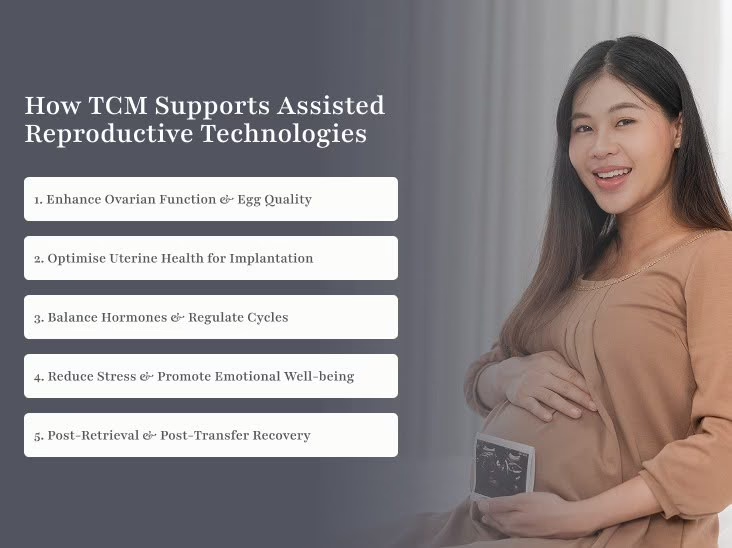
TCM can play a supportive role by:
1. Enhancing Ovarian Function and Egg Quality
TCM therapies, such as Acupuncture for IVF and herbal medicine, are traditionally used to promote blood flow to the ovaries and uterus. This approach aims to support the growth and development of follicles, as well as enhance the quality of eggs[8] retrieved during an IVF cycle or egg freezing process.
Moreover, treatment plans are typically adjusted to align with each phase of the individual’s cycle, from ovarian stimulation to retrieval. For instance, Acupuncture sessions may be scheduled more frequently (around twice a week) during the stimulation phase to manage the body’s response to medication, reduce stress, and support optimal results.
2. Optimising Uterine Health for Implantation
A receptive uterine lining is essential for successful embryo implantation. TCM techniques such as Acupuncture and Moxibustion are used to promote circulation to the uterus, support the thickening of the endometrial lining, and ease physical tension in the pelvic region[9]. These techniques may also be complemented with Cell Pro Therapy (CPT), which is a non-invasive therapy that emits reducing electrons to help the body manage oxidative stress.
Within the context of fertility care, CPT is used to support blood circulation, reduce inflammation, and enhance nutrient delivery to the reproductive organs. These effects can contribute to creating a more supportive internal environment during the implantation window.
3. Balancing Hormones and Supporting Cycle Regulation
4. Reducing Stress and Promoting Emotional Well-being
5. Supporting Post-Retrieval and Post-Transfer Recovery
After egg retrieval, it is common to experience bloating, cramping, or general fatigue. During this phase, TCM treatments can be tailored to promote circulation, remove inflammation and support recovery. Electro-Lymphatic Therapy (ELT), for example, can be used to support lymphatic flow and encourage circulation and nutrients to nourish the uterus.
Post-transfer care is typically more conservative. Treatment strategies focus on nourishing the body during this crucial phase.
Frequently Asked Questions
1. How soon can I start incorporating TCM into my fertility journey?
You can start incorporating TCM at any stage of your fertility journey. TCM can help prepare the body for conception, even before starting assisted fertility treatments like IVF or IUI. For those trying to conceive naturally, starting around 3–6 months in advance can support reproductive health and overall balance.
2. Can TCM fertility solutions help if I have been diagnosed with conditions like PCOS or endometriosis?
TCM can help manage symptoms and support reproductive health for conditions like PCOS and endometriosis.
Treatments are tailored to address underlying imbalances, helping to regulate menstrual cycles, support ovulation, and reduce inflammation, which are factors that may influence fertility outcomes[11].
3. What can I expect during my first consultation?
A detailed consultation to understand your medical history and current symptoms while trying to conceive.
On your first visit to a TCM clinic in Singapore, physicians will take time to understand your condition. Diagnostic methods such as pulse-taking and tongue observation are used to assess internal patterns, followed by a personalised treatment plan to support your journey if you are trying to conceive, whether naturally or through assisted means.
4. Do couples need to come for consultation together?
Yes, both partners are encouraged to attend.
When both individuals are involved, TCM care can be coordinated to support shared fertility goals. This approach is especially helpful for couples trying to conceive, as it allows for a more holistic understanding and better alignment of treatment plans.
5. How should I time acupuncture sessions when undergoing IVF/IUI?
It is generally recommended to begin acupuncture about three months before your IVF/IUI procedure. This helps to prepare and support the body ahead of treatment. As the procedure date approaches, acupuncture is typically scheduled one day before and one day after the key procedures. For IVF, this refers to the embryo transfer, and for IUI, the insemination procedure.
6. What are some fertility-boosting foods I should include in my diet?
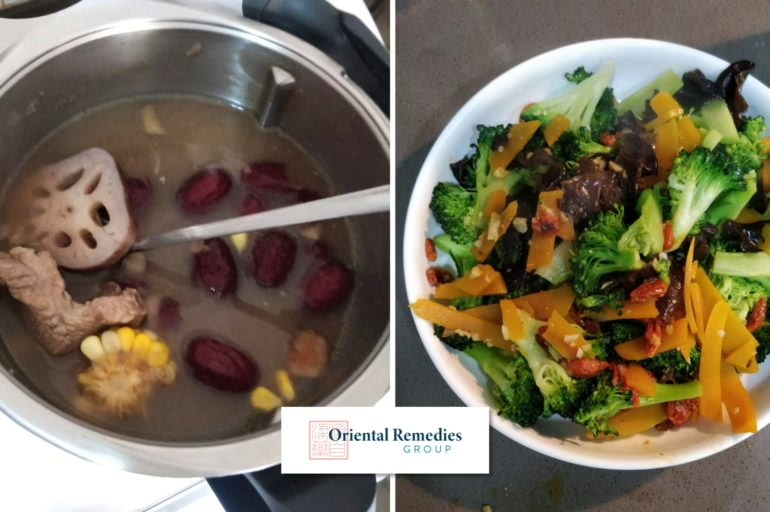
Foods like walnuts, citrus fruits, asparagus, red dates, and goji berries are commonly included to support fertility. These foods help nourish the body, support hormonal well-being, and create a supportive environment for conception. In TCM, however, nutrition is not one-size-fits-all, and the most suitable foods depend on your individual body constitution and underlying imbalances.
At Oriental Remedies Clinic, our Health Coaching services work alongside physician-led treatments to provide personalised dietary, sleep, and stress management guidance. Our health coaches collaborate closely with our physicians to craft practical and sustainable plans that support your fertility journey, helping you make informed lifestyle choices that align with your body’s needs.
Starting Your Fertility Journey with TCM
Find a MOH-registered TCM Practitioner
: Your fertility journey deserves qualified support. Choose a MOH-registered TCM practitioner to receive care tailored specifically to you.Choose a Care Plan Tailored to Your Goals
: Whether you’re seeking natural conception or support through IVF, IUI, or egg freezing, a personalised TCM care plan can significantly enhance your fertility outcomes. Your care plan may include, but is not limited to, Acupuncture, herbal medicine, dietary guidance, and lifestyle advice.Take Your First Step with Oriental Remedies Clinic
: At Oriental Remedies Clinic, our experienced TCM physicians have supported many individuals and couples in Singapore who are trying to conceive. We take the time to listen, understand your unique situation, and craft personalised treatment plans tailored specifically to your fertility goals.
Ready to Begin Your Fertility Journey?
Let’s take the first step together—schedule your fertility consultation today.
This article is written by Tan Wei Min (Chelsea), registered TCM physicians certified by the Traditional Chinese Medicine Practitioners Board (TCMPB).
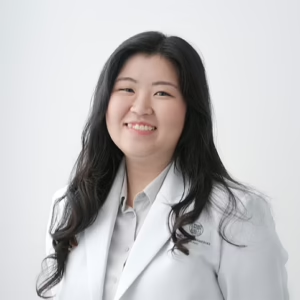
TAN WEI MIN (CHELSEA)
Senior Physician
Physician Tan holds a double degree in Biomedical Science and Chinese Medicine from Nanyang Technological University and the prestigious Beijing University of Chinese Medicine.
During a two-year internship at Dongfang Hospital, Physician Tan refined her skills in TCM treatments such as acupuncture, cupping, and moxibustion under the guidance of Professor Hu Hui, Head of the Acupuncture Department of Dongfang Hospital. Through this immersive clinical experience, she gained valuable knowledge on the versatility of TCM and how it can be used to complement different Western medical conditions across a wide range of diseases and conditions and has been actively applying her skills and sharing her knowledge since.
Physician Tan deeply values TCM’s comprehensive approach that addresses the underlying imbalances causing disease, rather than merely alleviating symptoms. This means any discomfort can be explained and addressed using TCM theories, giving patients hope to manage their symptoms through TCM modalities.
With an amiable and empathetic personality, Physician Tan cultivates strong rapport and trust with her patients. She takes the time to patiently explain TCM concepts, breaking down complex jargon so more people can understand and benefit from this ancient philosophical medicine. Her meticulous listening skills and genuine desire to help others enable the development of personalised treatment plans well-tailored to each individual’s needs.
This patient-centred approach has allowed Physician Tan to build a robust patient base benefiting from her expertise in treating a variety of conditions like pain/injury, fertility issues, mental wellness concerns, acne, insomnia, and more.
Note: all words in Italics mentioned henceforth refer to the TCM organ system and not the anatomical organs/terms referenced in Western medicine.
Disclaimer:
The content on this page is for information and educational purposes only. Such medical information may relate to disease, injury, drugs, and other treatments, medical devices, and/or health products. Medical information does not amount to advice, and if advice is needed an appropriate professional help should be sought. The disclaimer asserts that no warranties or representations are given in respect of the medical information and that the website operator should not be held liable if a user suffers any injury or loss after relying upon the medical information
Any devices used for technology-enhanced therapies are intended for use only for general well-being purposes or to encourage or maintain a healthy lifestyle, and is not intended to be used for any medical purpose (such as the detection. diagnosis, monitoring, management or treatment of any medical condition or disease). Any health-related information provided by this device or software should not be treated as medical advice.
References:
[1] https://www.who.int/news-room/fact-sheets/detail/infertility
[2] Dong, J., Wang, T., Zhao, L., & Chen, X. (2017). Pattern of disharmony between the heart and kidney: Theoretical basis, identification and treatment. Journal of Traditional Chinese Medical Sciences, 4(4), 317–321 https://doi.org/10.1016/j.jtcms.2017.12.001
[3] O’Brien K. A. (2010). Alternative perspectives: how chinese medicine understands hypercholesterolemia. Cholesterol, 2010, https://doi.org/10.1155/2010/723289
[4] Wu X. N. (1998). Current concept of Spleen-Stomach theory and Spleen deficiency syndrome in TCM. World journal of gastroenterology, 4(1), 2–6. https://doi.org/10.3748/wjg.v4.i1.2
[5] Zhou, J., & Qu, F. (2009). Treating gynaecological disorders with traditional Chinese medicine: a review. African journal of traditional, complementary, and alternative medicines : AJTCAM, 6(4), 494–517 https://doi.org/10.4314/ajtcam.v6i4.57181
[6] Zhou, J., Yang, L., Yu, J., Wang, Y., & Liu, Z. (2017). Efficacy of acupuncture on menstrual frequency in women with polycystic ovary syndrome: Protocol for a randomized, controlled trial. Medicine, 96(47), e8828. https://doi.org/10.1097/MD.0000000000008828
[7] https://en.cnys.com/article/356382
[8] Kim, J., Lee, H., Choi, T. Y., Kim, J. I., Kang, B. K., Lee, M. S., Joo, J. K., Lee, K. S., & You, S. (2021). Acupuncture for Poor Ovarian Response: A Randomized Controlled Trial. Journal of clinical medicine, 10(10), 2182. https://doi.org/10.3390/jcm10102182
[9] Zhang, S., He, H., Wang, J., Ma, L., Wei, X., Zhang, M., & Guo, Y. (2025). Acupuncture as an adjunct therapy for enhancing endometrial receptivity in female infertility: a literature review. Frontiers in Physiology, 16, 1548737. https://doi.org/10.3389/fphys.2025.1548737
[10] Yang, X. Y., Yang, N. B., Huang, F. F., Ren, S., & Li, Z. J. (2021). Effectiveness of acupuncture on anxiety disorder: a systematic review and meta-analysis of randomised controlled trials. Annals of general psychiatry, 20(1), 9. https://doi.org/10.1186/s12991-021-00327-5
[11] Chen, H., Deng, C., Meng, Z., & Meng, S. (2023). Effects of TCM on polycystic ovary syndrome and its cellular endocrine mechanism. Frontiers in endocrinology, 14, 956772. https://doi.org/10.3389/fendo.2023.956772
RELATED TOPICS


® 2026 Oriental Remedies. All Rights Reserved