VTL Tips: Boost Your Immunity With TCM For Safe Travels

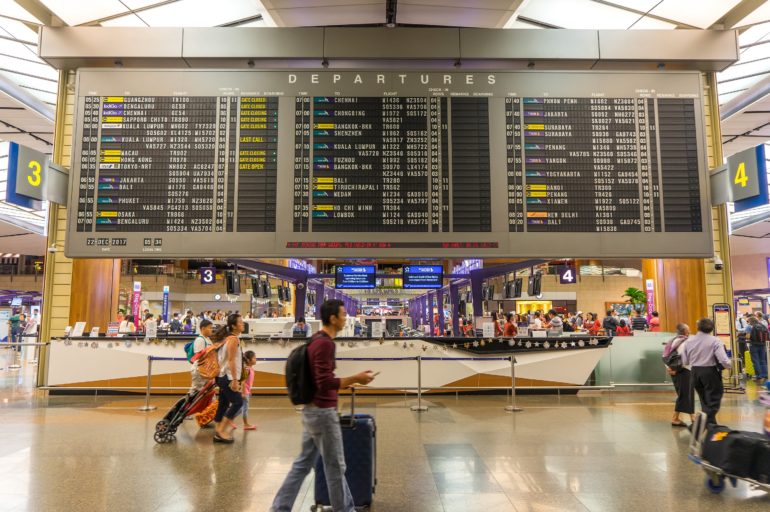
Link copied! Thanks to the Vaccinated Travel Lanes (VTLs), we can finally dust off the layer of dust on our passports and go on a vacation after being stuck in Singapore for more than a year. Under the VTLs, fully-vaccinated individuals can now travel to selected countries without having to undergo quarantine at the destination country and upon arrival back to Singapore. Individuals are instead required to take additional COVID-19 tests before departure, upon arrival at the destination country and when they return to Singapore. Undeniably, everyone is excited and scrambling to book their next flight. However, it is important to be well prepared for your trip, not just in the administrative sense but also in the physical sense. Having a healthy body and a strong immune system is essential for safe travels. Read on to find out how you can achieve that and prepare yourself for your VTL trip the TCM way. How to build up your immunity and prevent yourself from falling sick before and during the trip? Building up a strong immune system is crucial to prevent yourself from falling sick during the trip, thus, it is important to work on some pre-trip measures and pack immunity essentials to ensure that you are well-equipped for any health emergency. Try these TCM tips to prepare for your upcoming vacation: 1. Boosting your immunity pre-trip In TCM theory, our body houses a vital energy known as Qi, which is said to flow along channels called meridians to help our body maintain health. It is believed that the balanced movement of Qi powers, strengthens and heals the body. Thus creating a protective shield that protects you from external pathogens and other illnesses. TCM treatments such as herbal medication and acupuncture are used to maintain the balance of Qi in our body, thereby allowing the immune system to function optimally. Herbal Medication Herbal medication is typically prescribed as a unique formula that is suited to each patient’s constitution, which serves to balance the Qi in the body. Based on the patient’s symptoms, and diagnosis from their tongue and pulse, the physician would prescribe a formula based on the patient’s body conditions. In addition to balancing the Qi, there are some TCM herbs that can help to boost our Qi. A great example would be Astragalus Huang Qi (黄芪), which is most commonly used for tonifying Qi. It also has many other health benefits, such as its immune-boosting, anti-ageing and anti-inflammatory effects. [1] Pro-tip: Drink Huang Qi Tea To Boost ImmunityBrew 1-3g of Huang Qi in up to 1.5L of water to make a simple immunity-boosting tea that you can drink on a daily basis. Acupuncture Acupuncture can also be used to balance Qi by stimulating various acupoints to either help nourish or move Qi in the body. One commonly used acupoint would be Zu San Li (足三里) (ST-36), otherwise known as the “longevity point”. Zu San Li has functions such as balancing the body’s energy, relieving pain and treating various ailments. Electro-Lymphatic Therapy (ELT) Our lymphatic system is crucial in maintaining a healthy immune system and is involved in our body’s detoxification process. When the lymphatic system is congested, detox process decreases, causing more waste to accumulate in the body which slows lymphatic circulation further. Over time, toxins in the lymphatic system accumulate and the body’s ability to fight diseases deteriorates, making us more prone to sickness. Electro-Lymphatic Therapy is a highly effective method to decongest the lymphatic system. By improving lymphatic circulation, toxins, wastes and harmful pathogens can be effectively brought to our lymph nodes where the immune cells reside, allowing these harmful pathogens and wastes to be detected and cleared by the immune system. Cell Pro Therapy (CPT) Negative ions work by improving cellular metabolism.[2] By improving the cellular metabolism of immune cells, it can strengthen these immune cells which enhances their ability to destroy pathogens.[3] Negative ions can also speed up lymphocytes’ production of antibodies which aids the immune system in the elimination of pathogens [3]. Through the above mechanisms, negative ions can greatly boost the immune system, making us less prone to falling sick, as well as ensuring that our immune system is well-equipped to fight these pathogens. 2. Maintaining optimal immunity during your trip Acupressure massage In TCM, we believe that two organs are closely related to our immune system – Lungs and Spleen. Our Lungs are the first point of contact for most external pathogens that may enter through the pores of our skin or the openings of the face, while the Spleen is involved in the circulation of nutrients to the entire body, which ensures that our immune system is well-nourished to function properly. By ensuring that these two organs are healthy, it ensures that our body is well-prepared to fight off any infection. Below are a few acupoints that you can do acupressure massage on to help boost your immunity: He Gu 合谷 (LI-4) Location: Place the thumb crease of one hand on the edge between the index and thumb of the other hand, then bend the thumb. How to massage: Using the thumb of your other hand, massage the He Gu acupoint in a circular motion. You should feel some soreness. Massage on one side for 1 minute, then repeat on the other side. Note: Avoid massaging the acupoint on your period, or if you are pregnant, as this acupoint promotes blood circulation. How it works: He Gu acupoint helps to improve Qi and Blood circulation throughout the body and improve immunity. Zu San Li 足三里 (ST36) Location: Roughly 3 inches (or 4 fingers) below the kneecap, about 1 inch towards the outer edge. How to massage: Using 2 fingers, gently massage the Zu San Li acupoint in a circular motion. Use gentle but firm pressure. Massage on one side for 2-3 minutes, then repeat on the other leg. How it works: Also known as the “longevity point”, massaging Zu San Li has a rejuvenating and healing effect. Zhong Wan 中脘
Physician’s Guide To Manage And Relieve PMS

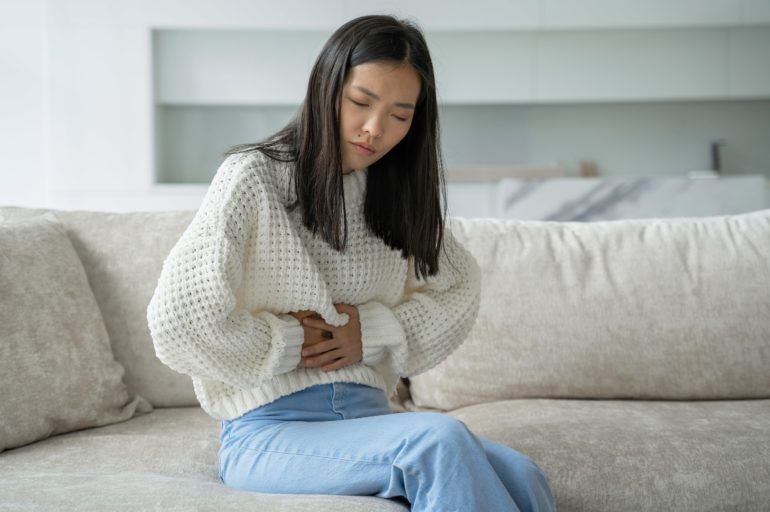
Link copied! Do you feel tired, easily frustrated and suffer from painful abdominal cramps before your period every month? If so, you may be suffering from Premenstrual Syndrome (PMS)! What is Premenstrual Syndrome? Premenstrual Syndrome, or PMS, refers to a group of symptoms experienced by women 1-2 weeks before their period arrives. Common symptoms of PMS include mood swings and irritability, abdominal bloating or cramps, breast tenderness, headache, fatigue, and so on. [1] It is widely believed that PMS happens due to a drop in female hormone levels (namely estrogen and progesterone) before their period. [2] PMS is a cause of concern as it happens in 90% of women [3], with some experiencing symptoms so severe that it makes it hard for them to report to work or go to school. PMS in TCM Perspective According to TCM theory, PMS is commonly linked to stagnant Liver Qi and stagnation of Qi and Blood in the body. The Liver is closely linked to our emotions, and stagnation of Liver Qi in our body may be the cause of irritability and mood swings. It is also said that where there is stagnation of Qi and Blood, pain will occur. As such, stagnation of Qi and Blood may result in symptoms like abdominal pain, cramps, and fatigue Why is PMS a cause for concern? PMS can affect one’s lifestyle and productivity depending on the severity of symptoms. In fact, some symptoms such as extremely painful period cramps may be a sign of more severe conditions such as endometriosis or Cold Womb Syndrome, both of which may lead to difficulties in conceiving in the future. As such, it is important to seek a medical professional’s help as soon as possible if you are suffering from severe PMS symptoms. How can we prevent and manage PMS via TCM? For those of us who find it annoying to deal with PMS every month, fret not as we can reduce the severity of symptoms just by making a few changes to our diet and lifestyle! Here are a few TCM home remedies you can try to combat PMS: 1. Diet Reduce intake of cold drinks and substitute with warm ginger tea Cold Womb Syndrome is said to be the biggest culprit of painful period cramps. It is caused by excessive exposure to cold environments, such as being in an air-conditioned room for long hours, or over-consuming cold and raw foods such as sushi, sashimi, and cold drinks. To combat Cold Womb Syndrome, reduce intake of cold drinks. Instead, sip on hot or warm beverages to warm up the body and relieve cramps. A popular TCM drink that you can take during PMS is Brown Sugar Ginger Tea as it is easy to drink and can help to combat coldness in the womb. Reduce intake of processed foods and substitute with whole foods Before your period, the changes in hormonal level may also increase hunger and make you crave unhealthy foods like snacks and sugary drinks. However, these foods tend to worsen PMS instead of alleviating it. To manage PMS, we recommend reducing sugar intake and substituting these high sodium processed foods with healthier options such as whole grains, lean protein, and fiber-packed fruits and vegetables. [4] Incorporating these healthy foods into your diet can also help reduce hormonal acne that happens before your period. Reduce Caffeine intake Caffeine can worsen PMS by keeping you awake at night and making you more anxious. Reduce your caffeine intake by cutting out caffeinated drinks like tea and coffee and substitute with non-caffeinated beverages like water or herb teas. Stay hydrated by drinking up! Bloating and water retention happen as a result of high sodium concentration in the body, which is caused by not drinking enough water. As such, you should stay hydrated and keep sodium levels low in order to reduce bloating and water retention. 2. Lifestyle Exercise regularlyExercising 2-3 times a week for at least 30 minutes each time can help to regulate hormone levels, boost mood and productivity, and may even reduce period cramps over time. [5] During the first few days of your period, you may want to substitute intensive exercises with light exercises to ease your body into moving about. Do stretches Back ache is a common symptom of PMS. Doing lower back and hamstring stretches can help to relieve back ache and muscle fatigue. Get sufficient restBuild good sleeping habits by having a regular sleep schedule. Turn off notifications on your devices and avoid looking at digital screens 2 hours before sleeping. This will improve sleep quality and help you feel more energized in the morning. [1] Keep warmWear clothes that keep you warm and avoid exposing your tummy. TCM believes that exposing the belly button will lead to Cold Womb Syndrome and worsen PMS 3. Other Remedies To relieve painful cramps, place a heat pack or hot water bottle over the lower abdomen until the pain goes away. A herbal heat pack that contains warming and blood–circulating herbs such as Mugwort works wonders for this! 4. Acupressure Massage Studies have shown that acupuncture can help to relieve symptoms of PMS. [6] We can achieve a similar effect with acupressure massage that can be done at home without the use of needles! Here are some acupoints you can try massaging at home: 合谷穴 (He Gu Acupoint) Location: Tender point found on the back of the hand between the thumb and the index finger. Function: He Gu Acupoint is a common point used to relieve pain and can help to relieve painful period cramps. How to massage: Press the acupoint with your other thumb and massage for 1 minute each time 太冲穴 (Tai Chong Acupoint) Location: Tender point between the big toe and second toe. Function: Tai Chong Acupoint belongs to the Liver meridian and can help to improve Qi circulation to help improve mood and reduce irritability. How to massage: Press on the acupoint with your thumb and massage for 1 minute each time